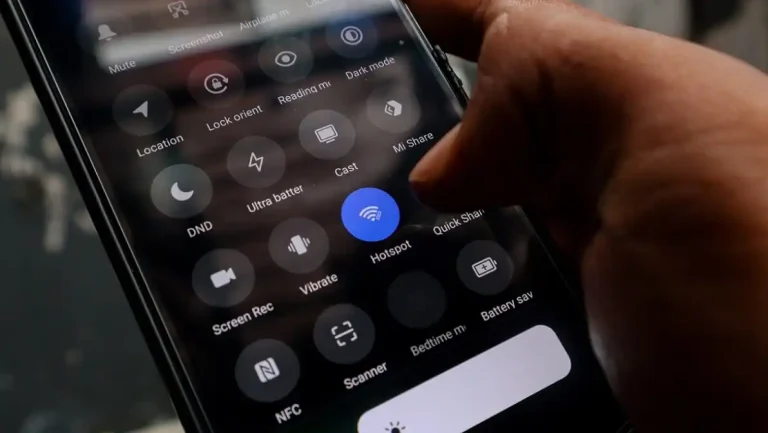
Ask a friend in the US to name the biggest phone brands in the world. You’ll hear Apple, Samsung, maybe Google, maybe Motorola. What you almost never hear is Xiaomi, which is strange, because by shipment numbers Xiaomi is the third-largest phone maker on the planet. It outsells almost everyone, and a typical American has probably never touched one.
The obvious guess is that Xiaomi is banned. It’s a reasonable guess. Plenty of Chinese tech companies are restricted in the US in one way or another, so why would Xiaomi be any different?
It’s not the only odd piece of Chinese hardware shipping right now. There’s also a $988 laser mosquito killer, and I’m still not sure how I feel about it.
I dug into it, and the actual answer surprised me: the ban people remember did happen, and it ended about four months later. What keeps Xiaomi out of American stores is something much less dramatic. It’s arithmetic.
Wasn’t Xiaomi banned, though?
Sort of, briefly. In January 2021, the Department of Defense added Xiaomi to a list of companies it had designated as “Chinese military companies,” which came with restrictions on American investment. Xiaomi’s response was to sue, and the company won.
In March 2021, a federal court in Washington suspended the designation while the case moved forward, and that May the court issued a final judgment removing it for good. Total time on the list: about four months.
Since then, there has been no rule, order, or law that stops Xiaomi from selling phones in the United States. Legally, a Xiaomi phone could go on sale at a mall kiosk in Ohio tomorrow.
Nothing is stopping them.
Which raises the obvious question: why fight a court battle for the right to sell in a market you’ve decided not to enter? Here’s where I should admit something. I’ve been using Xiaomi gear for years, and last month I dug through a desk drawer and found an old Mi Band I’d completely forgotten about.
Five minutes on the charger, it paired right up, and it worked like nothing had happened. That’s the whole Xiaomi pitch in one sentence: decent hardware at an almost annoying price.
The company even committed publicly back in 2018 to keeping its hardware profit margin around 5%. In India, Southeast Asia, and much of Europe, that model works brilliantly, because you can sell phones online and in open retail stores where the only real cost is the phone.
So why not just sell in the US anyway?
Because the American market isn’t built for that model. Most phones in the US are sold through carrier stores, meaning AT&T, Verizon, and T-Mobile, and getting onto those shelves is expensive.
Carriers expect network certification, revenue-sharing arrangements, service and repair networks, and real marketing money. Every one of those takes a bite out of a margin that Xiaomi deliberately keeps razor thin.
Sell a phone at a 5% margin and then hand a chunk of that to a carrier, and you’re basically working for free. Xiaomi ran those numbers and apparently decided the American market wasn’t worth the fight.
And there’s the memory of that four-month listing in 2021, too. Even though the company won in court, it’s not hard to see why a business might hesitate to pour serious money into a market where that kind of thing can happen, fairly or not.
The result is the situation you see today. You can import a Xiaomi phone, and plenty of people do, but there’s no official store, no warranty, and nobody to call when the screen cracks.
If you’re thinking about doing it anyway, here’s the part most guides bury. It isn’t the law that gets you. It’s the radio. T-Mobile leans on LTE bands 4, 12, 66 and 71, AT&T on 2, 4, 12 and 17, and Verizon on 13. Most Xiaomi models cover the common ones like 2, 4 and 12, which is why a global-version phone usually gets perfectly usable 4G on T-Mobile or AT&T.
The gaps show up at the edges. Band 71 is T-Mobile’s rural coverage layer, and plenty of imports skip it, so you end up with a phone that’s fine downtown and flaky an hour outside it. Verizon is stricter still: it keeps a device whitelist, and an IMEI that isn’t on it can leave you without VoLTE or Wi-Fi calling even when the bands match. In practice, T-Mobile is the easy yes, AT&T is a maybe that depends on your IMEI, and Verizon is a no.
If you go ahead, buy the Global Version rather than the China version. The China ROM ships without Google Play, and yes, you can work around that, but you’ll be maintaining the workaround for as long as you own the phone. Global versions come through importers like Giztop, Wonda Mobile and TradingShenzhen, usually shipping from Hong Kong in a week or two, as well as Xiaomi’s own AliExpress store and high-feedback eBay sellers. Budget for shipping and whatever customs decides to charge, and go in knowing the real cost: there’s no US warranty, so a cracked screen means shipping the phone back to Asia on your own dime.
What you can buy easily are the small things. Air purifiers, chargers, robot vacuums, and that oddly satisfying little electric screwdriver are all sitting on Amazon right now, and they sell well.
Then there’s the car, which is where Xiaomi has pointed most of its energy lately. The SU7 sedan got a second generation in March 2026, and the base version starts at roughly $32,000 in China, which the company has openly positioned as a rival to cars that cost twice that.
Europe is officially next, with a launch planned for 2027. The US isn’t on the map at all. No certification process, no dealer network, no timeline.
So the full Xiaomi experience, the phone that talks to the car that talks to your air purifier, is currently a China-only bundle with a European edition on the way.
I keep going back and forth on whether all this is smart or just timid. Staying out saved Xiaomi a fortune in carrier costs and legal bills, and the company seems to be doing fine without the American market. But markets are funny about absence. Stay out long enough and people stop wondering what they’re missing, and then one day the third-largest phone maker on earth is just a logo on a charger box. If you want to see what the shelves Americans actually shop from look like this fall, I went through Apple’s September event and the iPhone 18 lineup recently, and comparing it to what Xiaomi ships for the same money is kind of wild.