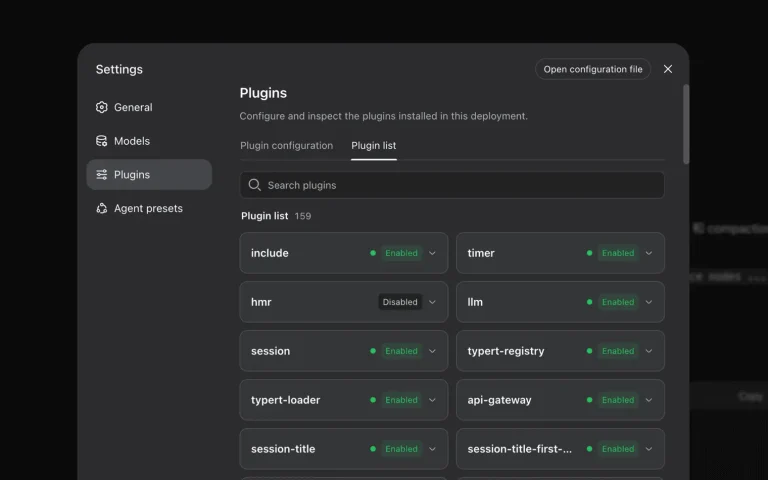
I was eating cereal at my desk when it occurred to me that I’d opened WorkBuddy eleven times yesterday and finished none of the tasks I’d opened it for.
I’ve been messing with WorkBuddy for a few days now. The official goal was to build myself a cleaner workbench.
The actual result, looking back, is that I have no idea how many versions I’ve made. It started as a fitness tracker. Weight, body fat, a few measurements.
Then I decided logging only the body wasn’t enough, so I added a food diary. Then, because a person apparently can’t be only physical, I built an English-study tracker.
And English study, naturally, led to a movie log, so now there’s a film tracker too. My real life is a complete mess.
But in the span of a few days, my digital life is immaculately organized. Four dashboards, zero real progress.
This morning I sat down planning to memorize vocabulary. An hour later I’d learned maybe five words.
What I had done instead was add a streak counter and a weekly study report to the vocabulary system, plus a little progress ring that does absolutely nothing. Useless features, all of them, and I was proud of them.
That’s when it hit me: I probably don’t want to learn English. I want a system that looks like I’m great at learning English.
So why do I keep doing it?
I’ve had this flaw for years. It started with a book about a Russian biologist named Alexander Lyubishchev, who logged how he spent nearly every hour for more than fifty years.
When I first read about him, I was stunned. Here was a man who turned time management into a life’s work, who could tell you in February how many hours he’d spent on moss back in 1937.
So I went off and started tinkering with Notion. Then Obsidian. And now WorkBuddy. The tool changed every time. The behavior never did.
It’s the perfect illustration of that old line about weak students owning the most stationery. Homework isn’t done? Buy five mechanical pencils.
Then three notebooks. Then a Transformers keychain for the backpack, because obviously the bag needs armor. Except now, with AI, people who can’t write a line of code get to build entire applications that do nothing useful.
I’m one of them. And here’s the part I didn’t expect, the part that should have worried me: this was supposed to be a good thing.
Building your own tools felt like progress. But the feeling I was chasing wasn’t really about the tools.
Most of my joy, I realized, never comes from the tool itself. It comes from the feeling of “holy crap, I made this.”
I know that feeling well. The first computer I ever owned, I spent a whole afternoon just installing the operating system and changing the wallpaper eight times, and I was happier about the wallpaper than about anything the computer would later do.
Humans seem built to assemble things. LEGO as a kid, workflows as an adult. Not that different, really, except the LEGO was at least honest about being a toy.
I do envy people who can drop into focus anywhere, who slide into a task without friction. Me, I can’t even sit through a two-hour movie anymore without reaching for my phone.
And that’s the thing about Lyubishchev that nobody puts on the quote posters. His genius wasn’t the recording. If he were alive today, with his actual research agenda, he probably wouldn’t be polishing a dashboard every morning.
The man had work. The logging was a byproduct, not the point. He spent decades on real study first, and the numbers came after.
I did it backwards: I started recording, then quietly fantasized that I’d eventually start the studying. The dashboard was the costume for a person I hadn’t become yet.
What actually changed?
Messing with WorkBuddy this week finally gave me one test for any system, and it’s stupidly simple: does it make you do the thing?
If it doesn’t, it’s an electronic pet. Like those farm games where you harvest crops, watch a number tick up, and feel a small happy ping before going back to not farming in real life.
So I deleted most of the features. The streak counter went. The progress ring went.
The weekly report went. What’s left is almost embarrassing in how small it is.
Did I write today? Did I move my body? What did I eat?
That’s the whole list. Three questions. Everything else I’d built was just renovating my own delay, putting nicer trim on the room where I avoid the work.
I went through how WorkBuddy stacks up against Codex a while back, and the real takeaway wasn’t the feature comparison. It was catching myself describing a toy as if it were a tool, using words I’d never use about a hammer.
I’ve also been rereading what actually saves time with these coding assistants after six months of using one, and the pattern is identical to the dashboards: the setup that earns its keep is boring, and the setup that’s fun is usually the one I abandon by next Friday.
The scarcest skill, in the end, is just execution. The workbenches are fun and I’ll keep building them, probably tonight. But I’m trying, badly, to let the doing win over the form.