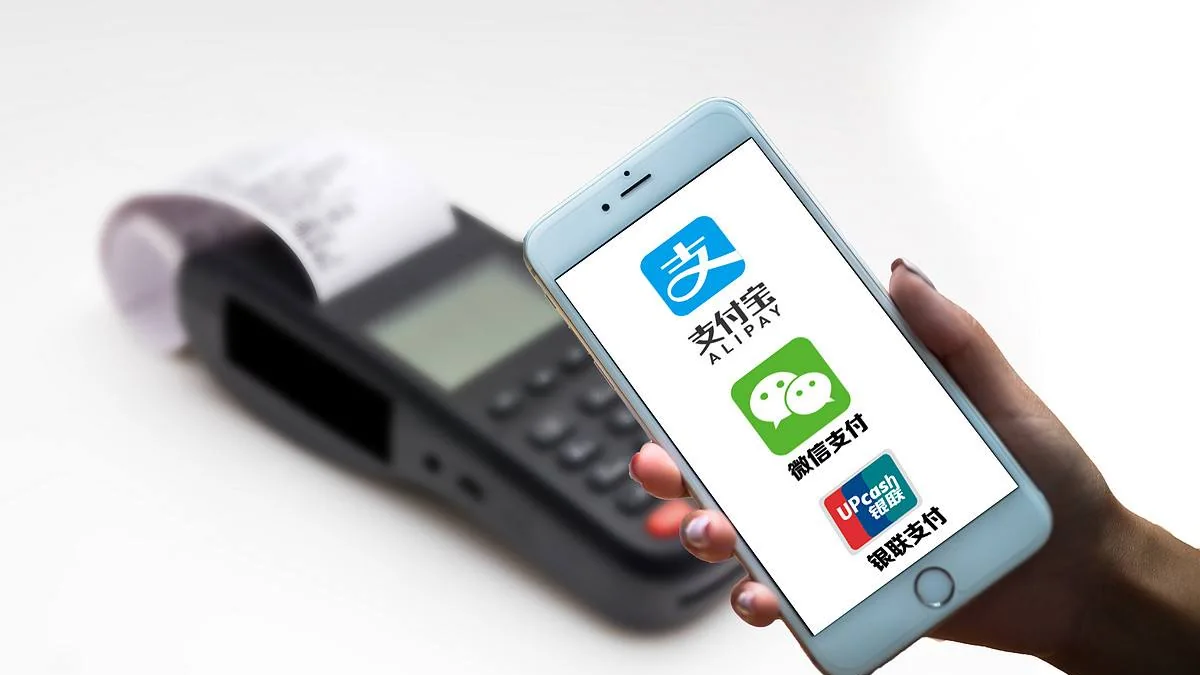
You can bind a US credit card to Alipay in about ten minutes. Whether Taobao accepts that card at checkout is a different question, and almost nobody writes about it.
Every English guide I found on this is written for tourists. They answer one thing: how do I pay for dinner in Shanghai. That’s a real question. It isn’t yours.
You’re in the US, trying to order from a Taobao seller. Different problem, messier answer.
What works, and what it costs
Alipay takes Visa, Mastercard, American Express, JCB and Discover. Binding one needs real-name verification with a passport. No Chinese bank account. No Chinese phone number.
The limits are generous. Roughly ¥35,000 per transaction, which is about $4,900. Around ¥350,000 a year, call it $49,000. Nobody buying phone cases hits either number.
So the limits are not the constraint people imagine. The fee structure is, and you don’t see it until you run a real order through.
WeChat Pay works on the same principle with its own thresholds. Both exist, and you don’t have to pick one forever.
The part that changes the math is simpler. Alipay charges a 3% cross-border fee on transactions above ¥200. That’s about $28.
WeChat’s cutoff works differently, and new users often get the fee waived for the first 60 to 90 days. Promotions move. Check before you build a plan around one.
Then add your own bank. Most US cards charge a 1% to 3% foreign transaction fee on top. Stack them and you’re somewhere between 4% and 6% over the sticker price before shipping even enters the picture.
That’s the number I’d write down first. A 30% saving shrinks fast once you take 6% off the top and then pay to move the box across an ocean. I worked through what shipping from China to the US actually costs separately, and the two numbers stack.
One more cost nobody budgets for. The exchange rate inside Alipay isn’t the rate you’ll see on Google. The gap is usually under a percent, but it sits on top of the 3% and on top of whatever your bank charges.
And payments don’t always settle the way you expect. On some orders Alipay holds the money until you confirm delivery. That’s good for disputes and bad if you forget, because the seller can be left waiting weeks.
Taobao also isn’t one store. It’s a marketplace where each seller sets their own terms, and some refuse international cards outright no matter what Alipay supports. You find out at checkout, not before.
That’s the piece that surprises Americans most. Amazon trained everyone to expect one checkout rule for the whole site. Taobao has no such rule, and it never will.
But there’s a second layer. Even when a seller accepts international cards, Alipay sometimes routes the charge through a channel your bank reads as a cash advance. Cash advances charge interest from the day they post. Check your statement the first time.
Taobao isn’t the only option either, and for what you’re doing it’s often not the cheapest. Tmall is the same company’s storefront for established brands. 1688 is the wholesale side, priced for people buying in bulk, with almost no English anywhere.
And 1688 is where the good prices are. It’s also where returns become genuinely impossible and where most sellers have never shipped outside China. Use it after Taobao feels easy, not before.
Returns are the real trap. If the item arrives wrong, mailing it back to a Taobao seller from the US usually costs more than the item did. Pay with a card that has purchase protection, or accept that a wrong order is a write-off.
When it fails, and what to try
Declines are common. They’re rarely Alipay’s fault. Two causes cover most of them.
The first is your bank. A charge from a Chinese payment processor looks like fraud to a risk model that has never seen you spend anything in China. The fix is boring: tell your bank before you start. Several banks let you do it inside the app now.
The second is your name. Alipay verifies against your passport. If the name on the card and the name on the passport don’t match exactly, including the order of given and family names, the whole thing jams. This catches people with hyphenated names more often than anyone expects.
Work through it in this order. Notify the bank. Check the name against the passport character by character. Try a debit card instead of a credit one. Then try a different card network.
That last step isn’t superstition. Small merchant payment codes in China route differently from large ones, and credit cards fail on them far more often than debit cards do. If you have a debit card, lead with it.
When none of that works, there’s the agent route. A Taobao agent or daigou service pays the seller domestically and bills you in dollars. You pay a service fee, usually 5% to 10%, and the payment problem disappears completely.
I’d rather pay 8% to an agent than fight a decline three times in one evening. That’s me pricing my own patience, and you may price yours lower.
Alipay has a dispute process too, and it works reasonably well for domestic buyers. For a US cardholder it’s slower, and the evidence you’ll need is photographs. Take them when the box opens.
One thing worth knowing about Tour Pass. Alipay’s Tour Pass, the prepaid balance tourists used to load with a foreign card, is gone. Every tutorial written before that still recommends it. If a guide from 2024 tells you to load a Tour Pass, close the tab.
This is actually good news for anyone reading now. Stale tutorials mean the search results are full of dead advice, and that’s exactly when a page like this one earns its keep.
Every time I read a Taobao guide that opens with “download the app and switch to English,” I know the author has never ordered anything. The English toggle changes the labels. It does not change the sellers.
So when does any of this make sense? For something you can’t buy here at any price, or something the US price on is three or four times the China price. Not for a $15 accessory that a US store sells for $19.
That $4 gap is the entire margin, and the cross-border fee eats it before shipping does anything.
But there’s an exception worth naming. Replacement parts for hardware you already own, especially older phones and cameras, often exist only on Chinese marketplaces. There the fee is the price of getting the part at all.
And that’s a different calculation from bargain hunting. You’re not comparing prices. You’re comparing availability.
So the honest answer is yes, usually, after ten minutes of setup and sometimes one phone call to your bank. Whether you should is just arithmetic, and the arithmetic gets worse the cheaper the item is.
A $12 phone case shipped from Guangdong was never a $12 phone case. It’s $12 plus the fee plus the freight plus the two weeks, and the two weeks are the part people forget to count.