Shipping from China to the US got more expensive for one reason, and it is not freight rates. The $800 exemption that let small parcels in duty-free is gone. Every package is now a customs event.
That single change moved the cost of an ordinary order more than any shipping line ever did. A threshold nobody outside logistics had heard of turned out to be the thing holding the whole hobby together.
For decades, the United States let parcels worth under $800 enter without duty. The rule was called de minimis. It is the reason a Taobao order could show up at your door with no paperwork at all.
What changed, and when
China lost the exemption first, in May 2025. The rest of the world followed in August 2025. An executive order in February 2026 kept the suspension in place.
So there is no value floor left. A $12 phone case and a $900 laptop are both dutiable, and both need an entry filed.
The United States was the outlier all along. The European Union has collected value-added tax on imports from the first cent for years. Most countries set a duty-free floor far below $800.
That made America the easiest market in the world to buy into directly. It also made the loophole politically visible once parcel volume exploded, which is the short version of why it closed.
My read: the percentage matters less than the paperwork. A 7.5% rate on a $40 order is three dollars. The brokerage fee for clearing that order can be fifteen.
And that is the part sellers never quote. The price on a listing is the item. Everything after it lands on your card at delivery.
What you actually pay, line by line
Three numbers stack on a cross-border order. The item price. The international freight. Then a customs bill that arrives before the box does.
That bill is not one rate. It is a base tariff plus whatever category-specific tariff applies to the product.
A Chinese smartphone is a clean example. The base rate on phones is zero. Section 301 adds 7.5% on top.
Other categories start higher. Furniture, apparel and some appliances carry base rates that were never zero to begin with.
The rates also keep moving. A court struck down the emergency-powers tariffs in February 2026, and what replaced them arrived as a surcharge with a time limit. Nobody should plan a purchase around a duty rate right now. I went through how that lands on a handset in what a phone really costs, and the same stacking applies to almost anything in a box.
Here is a ballpark for a $60 order. About $12 for air express. The customs duty on a 7.5% category runs roughly $4.50. Brokerage and a disbursement fee add somewhere between $10 and $20, depending on the carrier.
Landed cost lands near $87. That is the number to compare against, not the $60 on the listing.
It also explains something that looks strange. The same item on a US-facing site for $85 can be the better buy even though the listing looks more expensive. You are paying for the paperwork someone else already did.
Freight is the one line you control. Sea freight is cheap and slow. Air express is fast and priced by weight. Under ten pounds, express usually wins once you count the waiting.
Then come the fees nobody lists. Customs brokerage. A disbursement charge for fronting the duty. Storage, if the entry sits over a weekend.
Each one is small. Together they are why a $60 order can land at $95. Customs is one of the few systems where the smallest shipments pay the highest percentage, which is not a policy goal so much as what happens when a flat fee meets an order small enough for the fee to be the biggest line on the bill.
Consolidation is the real lever. Two orders shipped as one box pay one brokerage fee instead of two. That is worth more than hunting for a cheaper carrier.
Time is the other cost. Consolidation adds about a week. Sea freight adds a month. Air express gets you a package in a week, and that week is the whole product.
So who moves the box?
Two services get confused constantly, and choosing the wrong one wastes money.
A shopping agent buys on your behalf. You send a Taobao link, the agent pays the Chinese seller, receives the goods, and re-ships them. You never need a Chinese payment method.
A freight forwarder buys nothing. It moves boxes you already own. If you cannot pay a Chinese seller yourself, a forwarder cannot help you.
My judgment: use the official consolidated shipping, not a third-party agent. Taobao’s own consolidation is cheaper and the tracking is real. Agents earn their fee on complicated orders, not simple ones.
Payment has loosened too. Alipay now accepts foreign cards for many merchants. It is not universal, and some sellers still refuse anything but a domestic account.
Sellers have adapted in ways that are easy to miss. Some moved US-bound stock into US warehouses before the rule changed. Others raised the US-facing price and left the domestic price alone. And the ones who did neither simply stopped offering US shipping.
Then there is the question that decides half of all purchases. What cannot be shipped at all.
Loose lithium batteries are the big one. A battery inside a device is usually fine. A battery shipped on its own is restricted, and most forwarders refuse it.
Liquids, aerosols and anything pressurized are out. Counterfeit branded goods are out, and not only because they are illegal. Customs seizes them and you lose both the item and the money.
Sellers also opt out on their own. A growing number of Chinese listings simply do not offer US shipping, because the paperwork is not worth a small order.
Which brings up the risk most buyers find afterward. Returns.
Sending an item back to a Chinese seller means paying international postage in both directions. On a $40 item, that cost usually exceeds the item.
So the practical rule is short. Treat every cross-border order as final sale. Buy from a seller with a US return address, or accept that the thing is yours no matter what arrives.
Here is how I would make the call. Compare the landed cost, not the listing price. Add freight, add a brokerage estimate, add the duty. If the total lands within about a quarter of the US price, buy the US listing.
Buying from a seller who already moved stock into a US warehouse costs more up front and hands you a return address, a warranty and a phone number that answers during your own business hours.
And if the gap is wider than that, the import still makes sense. Just go in knowing the last mile is the expensive part.
One more thing, if the item in the box is a phone. Check the carrier angle before you check the price. I laid that out in the checklist on whether Chinese phones work here, because a cheap handset that cannot place a call is not a saving.
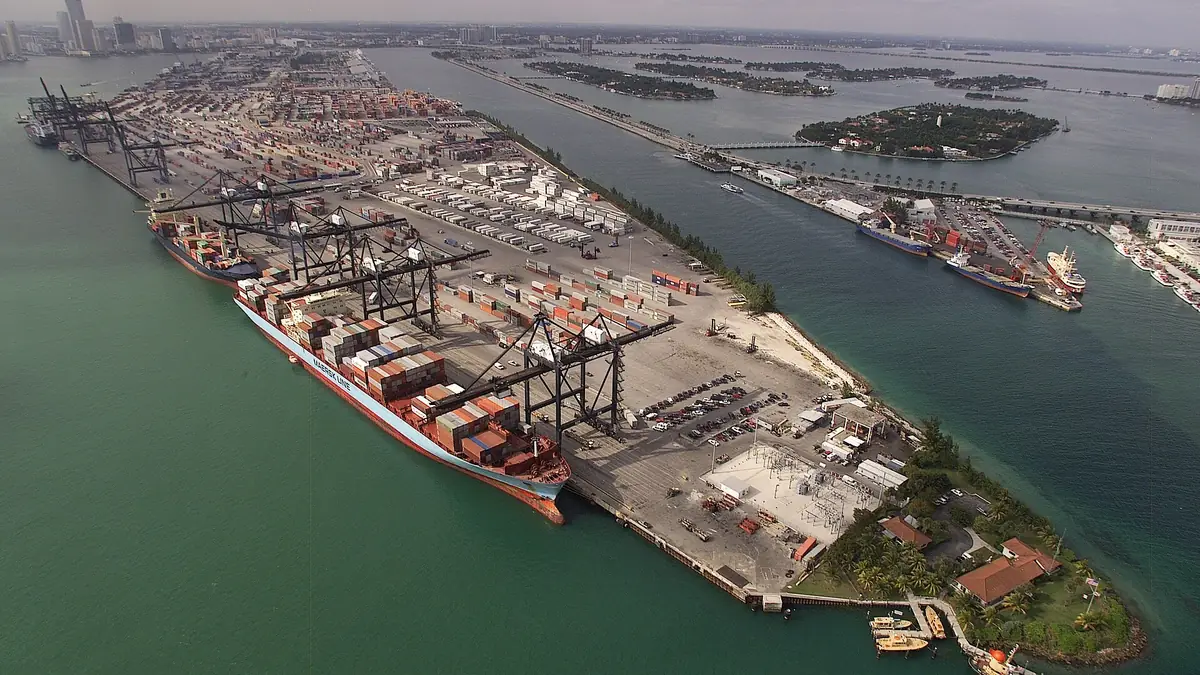
Featured image: an aerial view of a container port, photo by James R. Tourtellotte, public domain, via Wikimedia Commons.