Chinese phones work in the US, but not all of them, and not on every carrier. The band list, the IMEI database, and one voice standard called VoLTE decide whether your phone is a phone or a paperweight. Here is the short version first.
Bands are the easy part now. Most Chinese flagships sold since 2024 cover the frequencies T-Mobile and AT&T actually use. What breaks people is the layer sitting on top of the hardware.
So the order that matters goes like this. Bands first. Then the carrier’s approved-device list. Then voice over LTE, where most imports quietly die.
Everything else is a smaller problem than the internet says. The app store, the wallet, the warranty.
Bands and the IMEI whitelist come first
T-Mobile runs a lot of its coverage on two bands Chinese makers still treat as optional. Band n71 is the low-band layer. It reaches inside buildings and out into the suburbs. Band n41 carries most of the mid-band speed.
A phone missing n71 still shows four bars downtown. Drive an hour out and the signal falls apart.
Band n77 is what Verizon and AT&T lean on for new capacity. Verizon is also the strictest of the three. It decides what it will activate.
There is a fast way to check a model yourself. Look it up on the manufacturer’s own spec page. Marketplace listings copy each other, and the regional band table is usually the first thing to get mangled.
Model numbers make this worse than it needs to be. The same phone name ships in three regional versions, and the letter at the end of the model number changes the band table. Somewhere in a marketing meeting, someone decided that was clear enough.
My read: if a phone is missing n71 and you live anywhere suburban, skip it. That one band is worth more than a better camera.
Now the part nobody warns you about. US carriers do not simply read the radio bands and switch service on. AT&T and Verizon run approved-device databases keyed to the phone’s IMEI. If your model is not in that list, they can refuse to activate it even when the hardware would work fine.
T-Mobile is the most permissive of the three. It generally lets a phone no carrier sold register if the bands line up. That is why so much import advice ends with “get a T-Mobile line.”
The advice is correct and incomplete. T-Mobile’s openness can still fail on the voice side.
Verizon is the hardest door. Its network expects certified devices, and the company has been blunt that uncertified imports may not work. Check the exact model number against their list before you buy.
But if the model is not there, believe them. Arguing with an activation system is not a hobby worth starting.
None of this is malice. A carrier has to promise that any device on its network can reach 911, hand off between towers without dropping, and behave under load. Testing that costs real money, and a phone the carrier cannot sell is a phone with no payback. The door closes on economics, not on the radio.
OnePlus is the shortest path. It sells phones in the US, publishes which carriers certified each model, and ships the same software everywhere. If you want the Chinese-phone experience with the fewest landmines, that is where I would start. The trade is that you give up the models that only exist at home.
But the interesting models are the ones nobody certifies. Xiaomi, Oppo, Vivo and Honor all build hardware that would work on US bands. None of them will pay to certify a phone they do not sell here, and no carrier will test a device it never sells.
So what still breaks after it connects?
Voice calls. That is the one that surprises people, and it comes down to a standard called VoLTE.
US carriers shut down their 3G networks in 2022. After that, calls stopped traveling on the old voice path and started traveling as data over 4G. VoLTE is what carries them.
Which is why a phone can show a full 5G signal and still fail to place a call. The data works. The voice stack does not, because the carrier never added the device to its VoLTE profile.
My judgment: a phone that browses beautifully and cannot reliably call is worse than a cheap phone that works. Voice is the floor, not a feature.
There is a test you can run before you pay. Ask the seller for the IMEI and put it into the carrier’s own compatibility checker. AT&T and Verizon both publish one. It is the only pre-purchase signal that matches what the activation system will actually do.
Next, eSIM. Chinese flagships increasingly ship with two physical SIM slots and no eSIM at all. T-Mobile handles that fine, and so does AT&T in most cases. It becomes a problem when a carrier wants to activate over eSIM, or when you travel and want a local data plan without pulling the tray.
Then Google services. A mainland China model usually ships without Google Play. You can usually side-load it, and it usually works.
The failures are specific though. Banking apps that check device integrity can refuse to run. Google Wallet often will not finish tap-to-pay setup. Push notifications for apps installed outside the store are less reliable, because the notification path is not the same one.
None of that bricks the phone. All of it makes the phone feel like a project.
Wi-Fi is a smaller issue with one real trap. Phones built for the Chinese market often skip the 6 GHz band. Buy a Wi-Fi 6E or Wi-Fi 7 router for that band and the new phone may never see it.
Charging is the last downgrade. Chinese phones ship with 80W or 100W bricks that use private fast-charge protocols. Those protocols sit outside USB Power Delivery. Plug the same phone into a US wall brick and it drops to a much slower rate, often well under 30W.
Then there is paperwork. Importing a phone means customs duty on top of the price, and there is no US warranty unless the seller offers one. I ran the numbers in a separate piece on what a phone really costs, and duty is the line buyers forget.
And the phone still will not appear in the carrier’s database, no matter how much duty you paid.
One more question, because it comes up constantly. Can an uncertified import call 911?
Federal rules require carriers to try to complete any 911 call, and a phone with no SIM can still reach emergency services if a network is in range. The call itself is not the weak point.
Location is. Enhanced 911 depends on the phone and the network agreeing on how to send a position, and an uncertified device is exactly the case where that handshake is least tested. I would not make an uncertified import my only phone. That is a judgment, not a measurement, and I am comfortable defending it.
So the short list of what actually works. T-Mobile plus a model with n71 and n41 has the fewest surprises. AT&T is workable if you check the IMEI first. Verizon is the one to skip unless your exact model is on their list.
Buying channel matters too. Most imports arrive through resale listings, and a resale listing is a promise, not a warranty. If the seller cannot tell you the exact model number, they cannot tell you the band table either.
And check the return window before you pay. A cross-border return is slow, expensive, or impossible, and a phone that fails activation is exactly the case where you want the option back.
This is the same pattern behind why Xiaomi phones are legal here but hard to buy. Nothing is missing from the hardware. Permission is missing from the carriers.
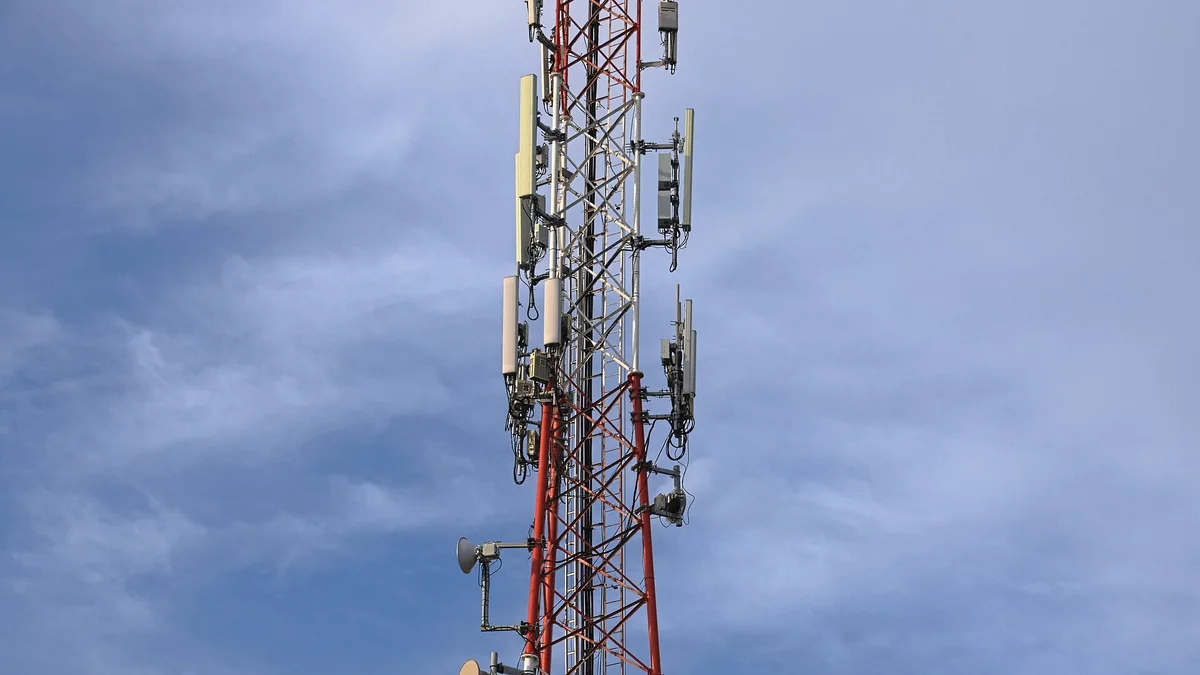
Featured image: a lattice communications tower, photo by Cvmontuy, CC BY-SA 4.0, via Wikimedia Commons.