Three companies, seventy-two hours
In early September 2026, three companies showed a new foldable phone. All inside the same week. Huawei, Xiaomi, and Apple. And each one is aimed at a different buyer.
Huawei went first, on September 7, with the Mate XT2. It starts around $2,800. Xiaomi followed the same evening with the 18 Fold, a book-style phone near $1,550.
Apple closed the week on September 9. Its first foldable ever is priced north of 2,000 dollars. Same week, same category.
For a long time the reasonable take on foldables was simple. They were fragile. They were expensive. A little pointless.
The screens creased and the hinges failed, at least often enough to matter.
That judgment was fair, and it is now out of date. The 2026 models are thinner, the hinges are rated for far more opens and closes, and several survive water exposure that would have killed an earlier generation.
The crease is still there if you look for it. But it no longer dominates the experience. So this is the year the format finally grew up. It took almost a decade.
For most of that time a foldable was a curiosity, not a product anyone would recommend to a friend. The hardware crossed from novel to good, and the change was sudden.
Thinness is the change that matters most. A foldable that vanishes into a pocket gets carried everywhere. One that bulges gets left at home.
Who actually builds them
Here is the part that gets missed in US coverage. The foldable category is now led by Chinese companies. Huawei alone holds about 60 percent of the Chinese foldable market.
Honor and Vivo ship serious foldables too. So does Xiaomi. Samsung is still a major player globally. Its share is sliding as the field crowds in. Shenzhen and Beijing build the best ones now.
The numbers behind that shift are worth sitting with, because they explain why the engineering kept improving while the American market stayed indifferent. A company that sells foldables only in the United States is fighting for a slice of a category most buyers still treat as a novelty, while a company selling them in China is serving customers who have had four generations to get used to the idea.
Not Cupertino. Not Seoul. That shift is the real news, and most Western reports barely mention it.
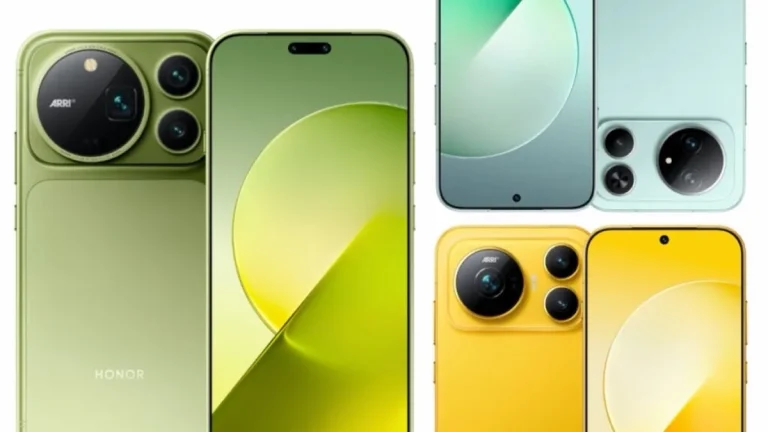
The Huawei Mate XT2 is the bold one. It folds twice, then opens into a small tablet. Xiaomi’s 18 Fold is the thin one. It measures about five millimeters when open. Light enough to forget in a jacket.
Apple’s entry is the cautious one, and that caution is the story. It drops Face ID for a side button. It skips the telephoto camera to keep the body thin. Those are real tradeoffs.
They tell you that even Apple is still figuring out what a foldable is for. The bigger tell is what it gave up. Apple spent years calling Face ID essential.
A company with Apple’s margins does not drop those things for fun. It drops them because a hinge and a second screen still eat room and money that a slab phone never spends. The compromises are not behind us yet.
Apple’s arrival matters less for the product than for the category. A foldable used to be a show-off gadget. With Apple attached, a normal person starts considering one. That pulls the whole market upward. It pulls the supply chain with it.
The supply chain is where the real money sits. Hinges and ultra-thin glass come from a handful of firms. Whoever owns those relationships sets the pace, Apple included.
Most of those firms sit in China and Korea. That is why all three launched in the same week.
Ask yourself what that means for the next five years. Volume pays for the tooling, and the tooling is what makes a hinge thin and a sheet of glass cheap. So the more foldables that ship in Asia, the cheaper every foldable gets, including the one Apple sells. That is a strange kind of advantage.
Should you care yet
The companies that already build the hinges and the thin glass are the ones who win that lift. Now the part that matters if you live in the US.
Neither the Huawei nor the Xiaomi is sold here. Most of the others are not either. In an American store you get one option, and it is Apple’s.
Notice who else is barely in this fight. Outside Apple, no American company has shipped a foldable at any real scale. That is not a coincidence. It is a judgment about where the returns are, and for now those returns have been somewhere else.
The same wall that keeps Chinese phones out of US carrier stores applies here too. I wrote about why that wall exists, and it is not changing for a foldable. Apple’s model will cost more than most laptops. And it gives up a camera to get there.
So how should you decide? I would ask two questions first.
Do you actually want a screen twice as wide? Can you live with a weaker camera than the best slab? If either answer is no, you are paying for a shape. Not a capability.
There is also the boring part nobody puts in a launch video. Foldables remain the worst category for repair and resale. Parts are scarce. Service is costly. And a hinge is one more thing that can fail once the warranty runs out.
Upgrade every two years? That should weigh on you.
If you are shopping today, the practical answer is no for most people. Maybe for a few. The slab phone is still the better value. The foldable premium is real. But the hardware crossed from novel to good in 2026.
I am not fully convinced the crease is solved. Every generation gets closer. Every review still finds it under the right light. Thin glass is thin glass.
One thing I keep coming back to, though. Nobody argues about whether foldables work any more. The argument is about whether they are worth the money, which is a better argument to be having.
The honest test is three years of daily folding, and nobody has that data yet. That is worth watching even if you never buy one. The next iPhone you consider might be a foldable. When that day comes, the technology behind it will have been perfected mostly outside the US.
The American buyer will be the last to feel it. The lesson is not to want one today. It is that the center of gravity in hardware has moved. The next decade of this category will be written largely in Chinese factories, whether American buyers notice or not.
There is a quieter signal in the timing too. All three launched within days of each other on purpose. Nobody wanted to let a rival own the headline. That is the moment the category stopped being a sideshow.
They are the main event now. And China built most of the stage. If you want the Apple side of this story, the same week also delivered the iOS 27 update that those foldables will run against. Read the two together and you get the full picture.