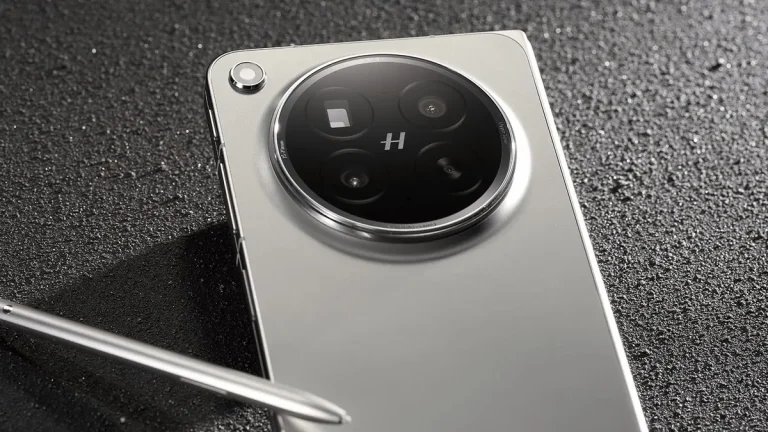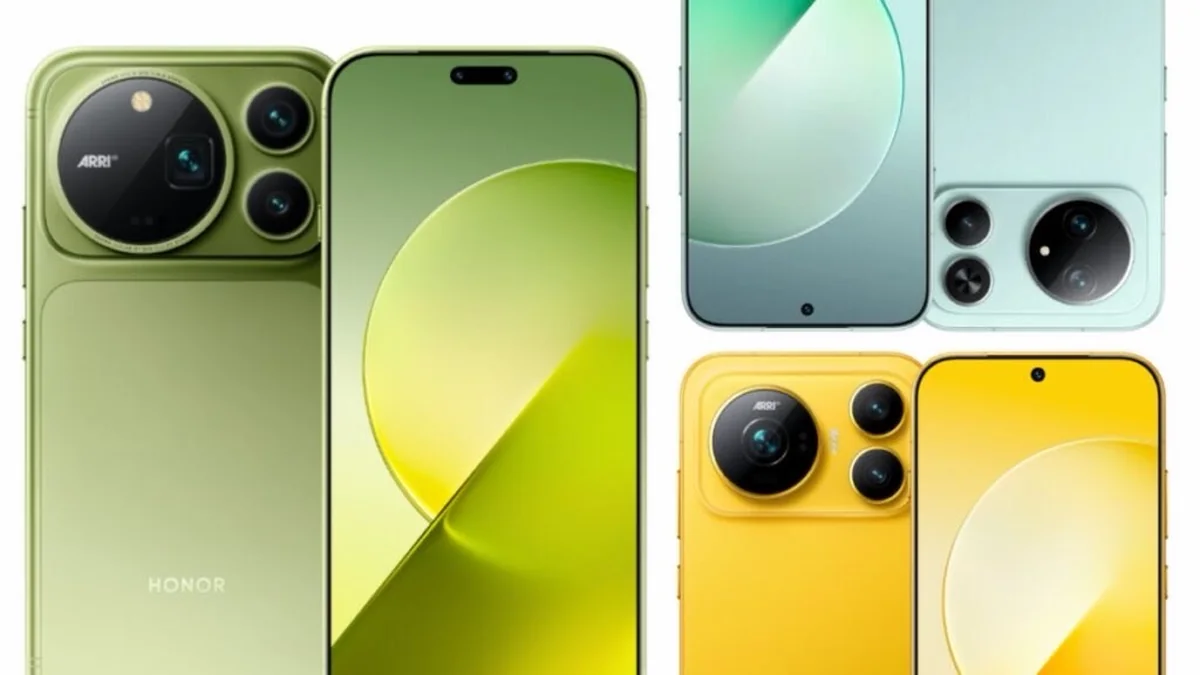
Honor published a battery spec sheet this week that reads like a typo. The Magic9 Super Edition, arriving September 28, carries an 11,000mAh battery in a body 8.1mm thick that weighs 227 grams. The standard Magic9 gets 8,000mAh. The Pro Max gets 8,800mAh. For comparison, the biggest battery Apple or Samsung sells in the United States sits around 5,000mAh.
Read those columns side by side. The gap is not incremental. Chinese phones now ship with roughly double the battery capacity of their American counterparts, in phones that are not thicker and not heavier. Roughly speaking, that is the difference between charging every night and charging every other night.
That gap did not appear overnight. It was not created by a breakthrough anyone in the US missed, either. It was built one percentage point at a time. Which is exactly why it will not be closed quickly.
The gap is the headline. The chemistry is the story.
The material problem nobody solved until recently
The bottleneck in phone batteries has been graphite for three decades. Graphite holds the lithium that stores the charge. It is stable and cheap. And mediocre.
Silicon can hold roughly ten times more lithium by weight. The catch is that silicon swells every time it charges, which shreds the material over repeated cycles. Every battery engineer on earth has known this for years. Nobody could make it survive daily use.
The trick turned out to be dosage. Blend a little silicon into the graphite and you gain capacity without wrecking durability. Honor’s own record shows how slowly that dial turns.
About 10% silicon in 2023’s Magic V3. Then 32% in last year’s Magic V6. Now 40%, with energy density climbing from 985 to 1,000 watt-hours per liter along the way.
Three flagship generations to add thirty percentage points. That is what real progress looks like in battery chemistry. It is also why no amount of spending buys a shortcut here, a fact that should temper any fantasy of Apple announcing a 9,000mAh iPhone next fall.
It helps that the supply chain next door is unmatched. The companies producing these silicon-carbon cells at scale sit in China, and they sell to every Chinese brand simultaneously. Honor tuned the chemistry, but it could tune it because volume manufacturing was a phone call away. Not a five-year factory plan.
Why the US market never asked for this
So why don’t American flagships have bigger batteries? My judgment is that it is a choice, not a capability gap. Apple and Samsung sell through carriers on installment plans, where the two-year upgrade rhythm matters more than any single spec. A customer who upgrades on schedule never lives with the battery long enough for capacity to become the deciding issue. Chinese brands sell in open markets against a dozen domestic rivals, where battery life is the spec customers can feel at the counter.
Usage patterns split the same way. In Chinese cities the phone is the wallet, the transit pass, and the television, and it gets used hard for four or five hours a day. A shared power-bank rental stand on every corner is a market telling you something about its battery anxiety. And a phone that never needs one is a marketing story that writes itself.
There’s a physics excuse, too, and it is partially true. Space inside a phone is finite, and American flagships spend more of it on things the US market rewards: bigger camera stacks, wireless charging coils, plus the magnet arrays that make their accessory systems snap on. Every cubic millimeter given to a magnet is one not given to a cell.
But Chinese phones pack those features too, and Honor still found room. The excuse explains part of the gap. Not double.
The honest counterargument runs the other way. Efficiency matters as much as capacity. iPhones are famous for lasting a full day on smaller cells because the chip and software waste less. Fair.
But efficiency caps out at “lasts the day,” and capacity is what buys you the second day, the camping trip, the airport delay. An 11,000mAh phone is not a better version of lasting a day. It is a different relationship with the charger, and once you live that way it is genuinely hard to go back.
Two cold showers before anyone orders one from a reseller, though. First, capacity is not endurance. A silicon-heavy cell can lose peak capacity faster across cycles than a conservative graphite design, so Honor’s warranty terms will matter more than the launch-day number.
Second, filling 11,000mAh takes time even at 80 watts, which reshapes the overnight-charge habit. The spec sheet solves one problem. It quietly creates another.
There is also an awkward macro layer. This battery boom lands in the same cycle that is making every other component expensive, and batteries are one of the few places where brands can still add a felt improvement without a felt price increase.
Expect Chinese marketing departments to lean on that hard through 2027. A bigger battery is the cheapest wow a spec sheet can buy right now.
Notice, too, that China is not even unified on the answer. Some brands spent the last two years chasing absurd charging speeds instead, refilling a small battery in fifteen minutes. Others went the Honor route and made the tank. Two philosophies, one market, both extreme. The American market, meanwhile, split the difference and got a phone that lasts a day, which pleases nobody and offends nobody.
Speed is a demo spec. Capacity is a life spec. The chemistry decides, and the marketing just narrates.
For US readers the practical part is the usual wall. Honor phones are not sold in America, and the reasons rhyme with why you cannot buy a Xiaomi at a carrier: no band certification deals, no carrier distribution relationships, no warranty network. The workaround routes exist. They mean importing, accepting patchy band support, and living without easy service. For a phone whose main superpower is its battery, that trade may actually be worth running the numbers on.
If you do run them, price the risk honestly. An imported Honor has no US warranty, limited band support on Verizon in particular, and no trade-in program to catch you when you upgrade. What you get in exchange is a phone that sleeps at 60% charge. Some people will call that a gimmick. The people who carry a power bank everywhere will not be among them.
The wider point survives the import math. The US phone market has optimized for a customer who upgrades every two or three years and never notices the battery. The Chinese market has optimized for a customer who keeps the phone until it dies and notices nothing else. Those are two different products. This year the difference finally became a number everyone can read: 11,000 against 5,000.
I would not bet on that gap shrinking soon. Silicon content will keep climbing a few points per generation on both sides, but the American brands would need to rebuild supplier relationships and re-prioritize a spec their carrier partners never asked about. The gap in battery capacity, unlike the batteries themselves, is not going to swell quietly until it bursts. It is going to sit there on the spec sheet, doubling, while the US market argues about something else.