Buy a Chinese phone in Shenzhen and fly it to Texas, and you moved the phone without moving the warranty. Coverage follows the country where you paid, not the brand on the back.
Most people learn this the expensive way. Something breaks in month nine. They look up the nearest service center. The answer is no.
What the wording actually says
Pull up the warranty page for your model and look for one phrase. “Country of purchase.” Or “authorized markets.” Sometimes it sits buried in a paragraph about where service is offered.
That clause does all the work. A one-year warranty that reads well on a product page is often a one-year warranty in exactly one country.
Authorized resellers make it worse. Two shops on the same street can sell the same phone and only one of them counts, because authorization is granted per retailer rather than per model.
This is also why I’d never trust the phrase “global warranty” without reading the paragraph underneath it. Global in a marketing headline and global in a terms document are not the same word.
And the wording shifts by model, not just by brand. One flagship gets worldwide coverage. The cheaper sibling gets regional coverage. Same company, same webpage style, different promise.
So you have to read your own model’s page. Not the brand’s general support page. Not a review from 2023.
I don’t think companies are cheating here. Supporting a device in a market where it was never sold costs real money, and parts inventories follow sales volume. I think you should know before you buy rather than after.
Your three routes when it breaks
Route one is the official channel, and it depends entirely on whether the brand runs US service at all. If it does, ask two questions first. Will they take a device bought outside the US, and do they need proof of purchase from an authorized seller.
If they don’t, you’re shipping the phone back to China. That’s real postage both directions plus the weeks in the middle with no phone. On a cheap device the round trip can cost more than replacing it.
Ask the carrier question too, which people forget. If the phone will live on a US network, a replacement shipped from China may arrive as a model without the bands you need. Coverage that hands back the wrong device is not coverage.
And “cheap device” is doing a lot of work in that sentence. A $300 phone doesn’t justify two international shipments.
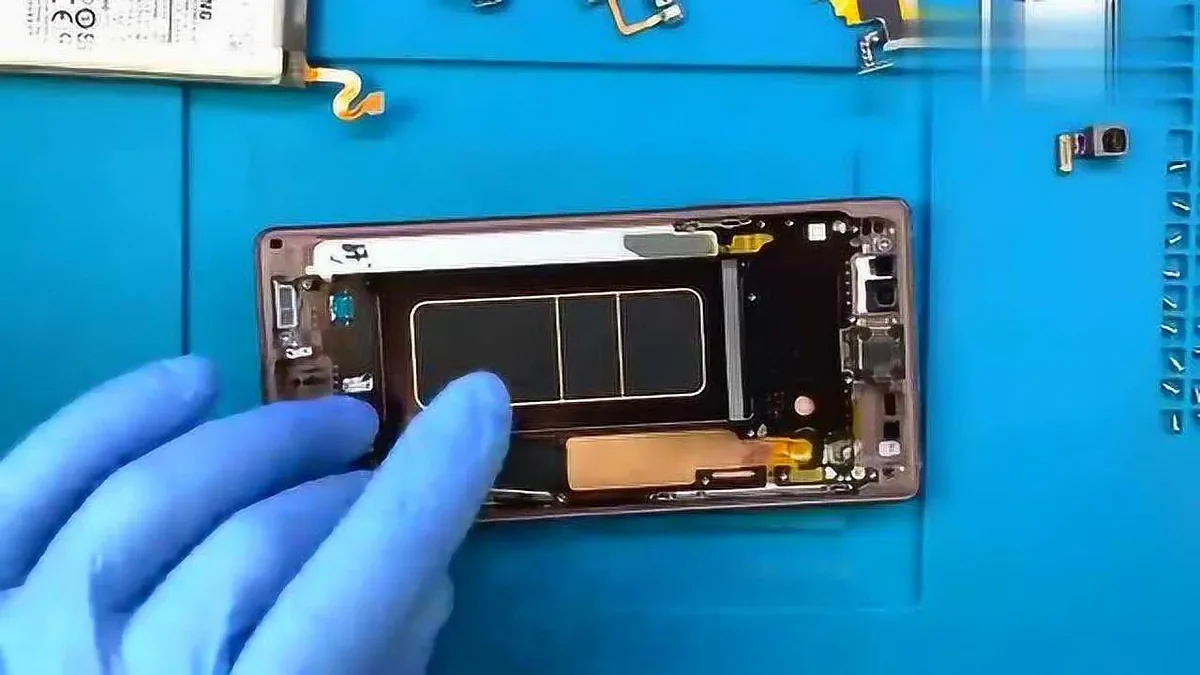
Route two is third-party repair. For popular models this is genuinely fine and parts are easy to find. For anything sold only in China, parts are the problem rather than the labor.
Two things to know before anyone opens the case. Water resistance doesn’t survive a repair bench unless it gets resealed properly, and whatever manufacturer coverage you had left ends the moment the seal breaks.
Ask about parts first. If the shop has to order from China, you’re back to waiting weeks anyway.
Route three is the one almost nobody uses. If you paid by credit card, you may already have purchase protection or an extended warranty benefit sitting on that account.
Many cards that offer it add a year past the manufacturer term, and a number of them cover purchases made overseas. Read the benefit guide, because exclusions are specific and they vary by issuer.
So check it. Checking costs ten minutes, and it’s the only route that doesn’t depend on a manufacturer saying yes.
But read the exclusions twice. Several of these benefits exclude items bought from sellers outside the US, which is precisely your situation. Others don’t care where you bought it.
There’s a fourth thing people try, which is asking the seller to handle it. That works when the seller has a US warehouse and fails when it’s a marketplace storefront with one person behind it.
You can usually tell which one you’re dealing with before ordering. Sellers with real service answer questions in paragraphs. Sellers without it answer in one line.
And a seller who offers a “one year store warranty” is offering you a promise from a company you may not be able to reach in eighteen months. Treat it as a nice extra, not as coverage.
One more thing worth doing before month nine arrives. Save the IMEI somewhere outside the phone itself. Every warranty conversation starts with that number, and a device that will not boot is a device you cannot read it off.
Two things are worth doing at the moment you buy, and both take under a minute. Screenshot the warranty page you actually read. Then put the receipt somewhere you’ll still have it in two years. When coverage gets disputed, the person being asked for proof is you.
Extended protection plans sold at checkout are a separate decision, and I’d usually skip one on a phone bought this way. Those plans are priced for devices sitting behind a real service network, and a plan that can’t source parts doesn’t rescue you either.
The math I’d run before buying is short. Take the price gap between the China version and the US version, then subtract what one out-of-warranty repair would cost you.
If the gap is $400 and a screen replacement runs $180, the deal survives a break. If the gap is $80, it doesn’t survive anything.
Not everyone needs the math to come out positive. If you replace phones every year, warranty barely matters to you. If you keep one for four years, it matters more than the discount does.
If you’re still deciding whether to bring one over at all, I put together a full checklist for using a Chinese phone in the US, and warranty is one line on it. Some of the others are things you can check in ten seconds, like whether your Chinese phone supports eSIM.
Warranty is the one line you can’t verify quickly. It’s also the one that costs the most when you get it wrong, because the failure happens long after the return window closed.
None of this means don’t buy the phone. It means the discount carries a deductible, and that deductible is whatever the first repair costs you out of your own pocket.