Chinese AI apps post user numbers that would embarrass most Silicon Valley launches. Whether you can install one, sign up and pay from the United States is a separate question. It breaks into three doors: the download, the account and the money.
Most coverage skips the doors and talks about benchmarks. That is backwards for a normal person. A model you cannot register for might as well be a rumor.
Door one is the download. Some of these apps sit in the US App Store and Google Play right now. DeepSeek is the famous case, a free chatbot that shot to the top of Apple’s free chart in January 2025 and has stayed on the stores. CapCut, ByteDance’s video editor with AI features baked in, has been a global product for years.
Door two is the account, and this is where most people stop. A handful of services still want a mainland Chinese phone number to register, and a +86 number is not something a visitor can easily keep alive. One requirement, near-total lockout.
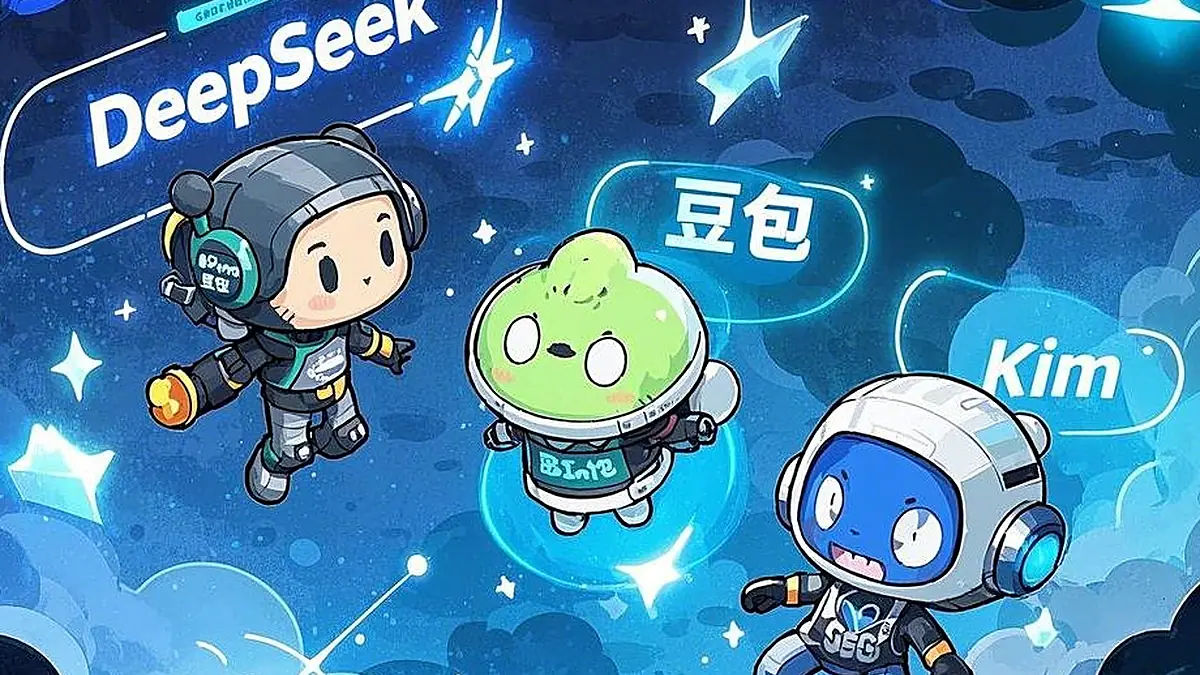
Doubao, ByteDance’s consumer assistant, is the biggest name behind that door. Its user base at home is enormous. For overseas users the company ships a separate international app under a different name, so the thing your Chinese friends use is not quite the thing you will find in your store.
Worth knowing before you settle for the international build: it usually trails the home version. Features land in Chinese first, sometimes months ahead. You are not getting the app your friends describe. You are getting a smaller one that happens to speak English.
Kimi, from Moonshot AI, is the one I could not pin down from outside, and that is worth saying honestly. Its store presence seems to shift between regions. Secondhand guides disagree with each other, too. Availability that changes monthly is a fact worth knowing in itself.
There is something funny about the whole situation. The apps with the wildest user numbers are the hardest to reach, while the ones that crossed over smoothly are the ones nobody treats as exotic. Reachability is its own kind of marketing, and most companies have not noticed.
Door three is money. DeepSeek’s API bills internationally by the token, which is why developers worldwide build on it, and its per-token prices undercut the big US labs by a wide margin. Consumer subscriptions are messier, because card acceptance and pricing tiers often differ between the home app and the international one.
The same app can pass one door and fail the next. That is the pattern worth burning in. Download does not imply signup. Signup does not imply payment. Each door has its own lock.
The +86 gate deserves a note of sympathy, actually. Phone-number signups cut spam at scale, and the Chinese number system is tied tightly to real identity. The cost is that the same check that blocks bots also blocks every curious visitor from Ohio.
One pattern helps more than people realize, though. Almost every one of these companies runs a web version of its chat, and web pages do not care which app store you can see. The store gate is real, but it is rarely the last gate. Before writing an app off, paste its name into a browser and see who answers.
And if the web version works but the app does not, that is not a half win. A browser bookmark gives you the model, which is the part you came for. The app is mostly a nicer wrapper around the same thing.
So which ones actually clear all three doors from the US?
DeepSeek and CapCut, comfortably. Qwen, Alibaba’s model family, keeps a public web chat that works without a local number as of this writing. Kling, the video generator, runs a separate international site for overseas accounts. Those four cover chat, coding help and video generation for most casual needs.
And Qwen has a second exit that the others do not. Alibaba releases the model weights openly, which means you can skip the doors entirely and run the thing on your own hardware. That is the strongest version of availability there is. A download cannot be region-locked after the fact.
There is also a difference between works and fits. An app can clear all three doors and still not earn a spot on your home screen. No widgets, no voice assistant hookup, no notification habits you would miss. Fit is its own door, and nobody writes a FAQ for it.
My honest take: the apps worth adopting from the US are the ones that treat overseas users as a product line, not an afterthought.
Some companies maintain an international app. A global sign-up. Foreign card billing. That trio means they want you.
Missing any piece of it means you are an experiment, and experiments get switched off.
The deeper reason is structural. Chinese consumer apps are built around a domestic setup of super-app logins and local payment rails. Ripping that out for a global version is real engineering work, so companies do it selectively, only for products where they smell a worldwide market.
There is a trust question too, and it rarely gets said out loud. Your chat history lives on their servers, under laws you may not know much about. For casual questions that costs nothing. For anything sensitive, the open-weights route starts looking less like a hobby and more like a feature.
So my rule for trying any of these is simple. Give each one a week, on one task, and keep the winner. Do not migrate your whole workflow on day one. These products move fast, and a workflow built on a fast-moving product needs an exit plan.
I rounded up the big names and their scale in an earlier piece on the Chinese AI apps you have never heard of. If you build anything on the APIs, the pricing math on DeepSeek shows why developers keep crossing over.
The short version, for the person who wants one answer. DeepSeek for chat and reasoning. CapCut for video editing. Qwen on the web if you want a second opinion, or on your own machine if you want the doors gone for good.
Store listings change monthly. Treat this as a snapshot, not a map. Check the three doors in order before you build a habit on any of them. The download is the only door that never argues back.