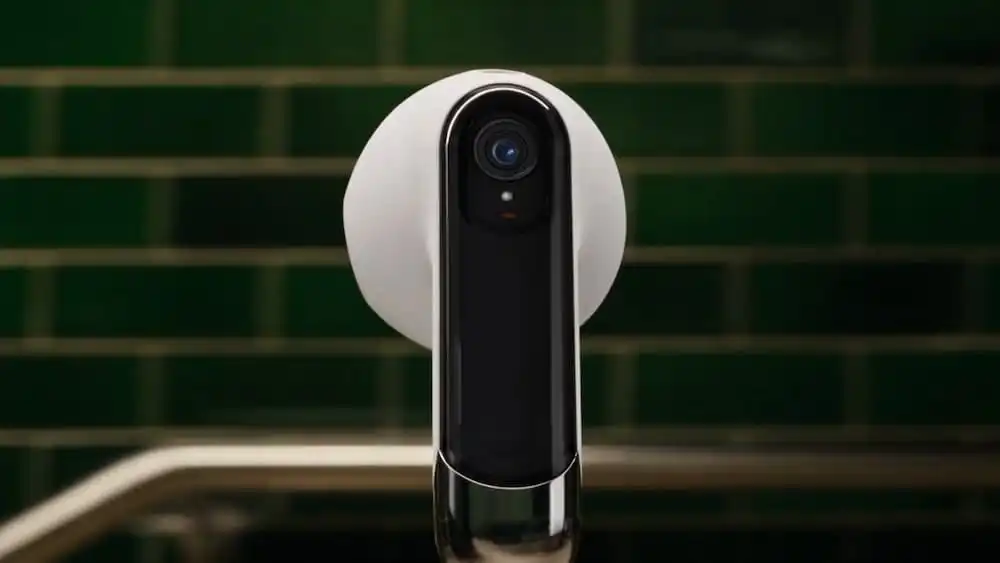
So Apple is really making AirPods with cameras.
I know. It sounds weird. When I first heard the rumor a few months ago, I thought it was one of those Apple is working on a car type leaks, technically true but years away from anything real. But then a video showed up inside macOS Tahoe 26.7 last week. And now there’s code. A lot of code.
Here’s the thing. These aren’t cameras for taking photos. They’re not for FaceTime or vlogging. Apple is building them for Visual Intelligence, which is basically giving Siri eyes. You point your head at something, ask a question, and the AirPods see what you’re seeing.
Honestly? I’m still trying to wrap my head around whether I’d actually use this. But the technical details that just surfaced are fascinating. Let me walk you through what the code actually says.
What the Code Reveals
A MacRumors forum member named mactracker found a hidden framework called AccessorySensorManager inside the macOS Tahoe 26.7 release candidate. It manages sensor data from camera-equipped AirPods when they’re connected to a Mac. And it spills a lot of details.
Here are the seven big takeaways:
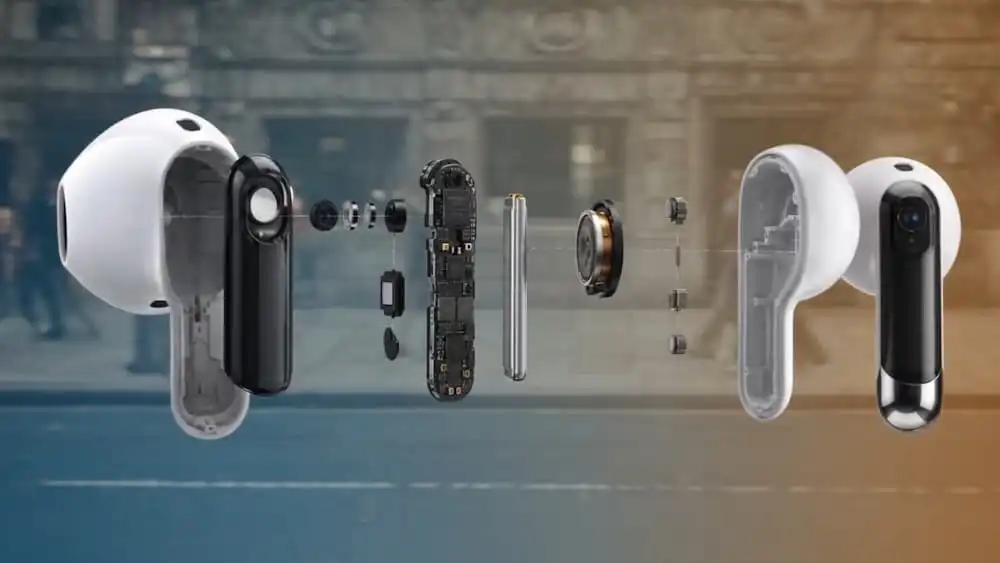
- Both earbuds have cameras that work together. Each AirPod has its own camera sensor. They capture synchronized color images at the same time, using matching frame IDs so the system knows both photos are from the same moment. Why does this matter? Two angles give Visual Intelligence a better understanding of a scene than one eye could. Think of it like depth perception. Your brain uses two eyes to judge distance. Same idea here.
- Two modes: Active and Passive. The cameras operate in two modes. Active mode is probably triggered by you, through Siri or a gesture. The system asks for a synchronized pair of images. Passive mode runs in the background, constantly sampling the environment at a lower quality.
- Different resolutions for different modes. In active mode, the AirPods capture a 640 by 640 image and output a processed 1024 by 1024 image. That’s about 1 megapixel. In passive mode, they capture 320 by 320 and output either 320 by 320 or 512 by 512. Those are capture-specific resolutions. The actual sensors might be higher.
- It handles head movement. Your head moves constantly. You tilt, you turn, you nod. The code includes lens distortion correction, dual-camera calibration, and motion sensor calibration. It can even reject images that are too shaky or blocked. Apple knows you’re not a tripod.
- Some AI runs on the AirPods themselves. The code mentions peripheral inference, which is on-device processing. One specific use case? Detecting whether a person is in view. That means the AirPods can figure out some things without sending data to your phone or the cloud. Faster response, less battery drain.
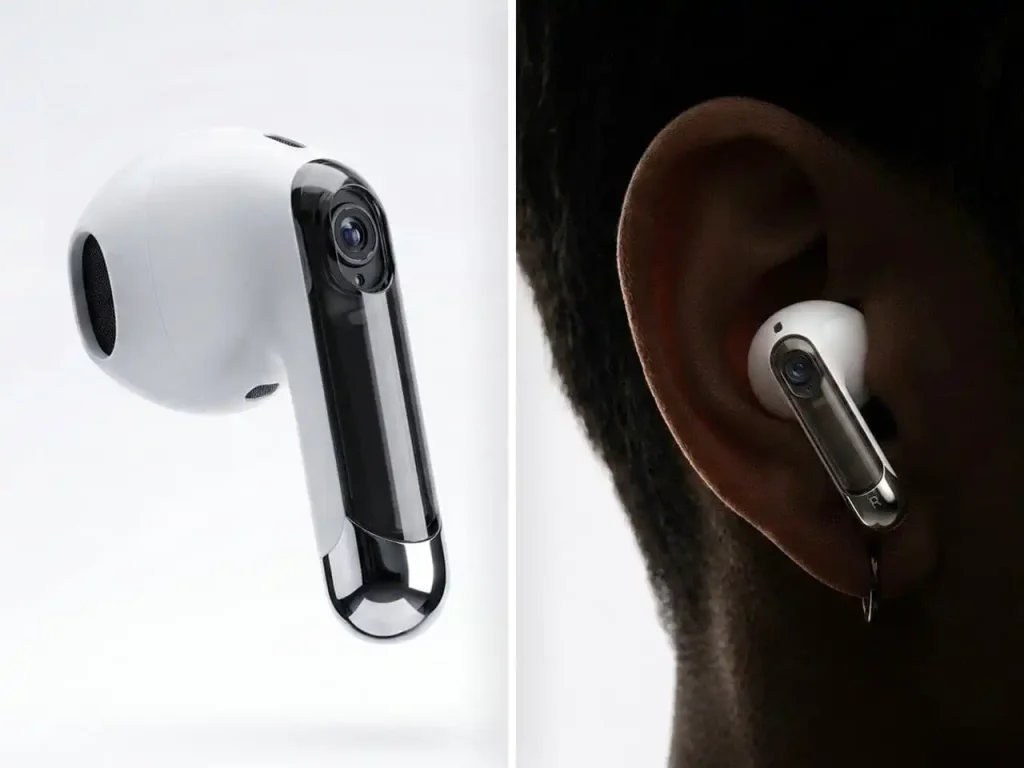
- There’s a status light. Each earbud likely has an LED indicator. The framework can control its brightness. When the cameras are active, the light turns on. That’s a privacy protection. People around you will know when they’re being seen.
- Not video, just periodic stills. Important distinction: this is not video recording. The cameras take periodic still frames for Visual Intelligence to process. You can’t record a video of your kid’s soccer game with these. That’s not what they’re for.
To put that in perspective: your iPhone captures 12 megapixels or more. This hardware is built for machine perception, not your photo album.
Wait, But When Can I Buy These?
Good question. The short answer: not this year.
The leaked video showed a prototype codenamed B790, which Bloomberg’s Mark Gurman says Apple has canceled in favor of a new generation called B798.
The B790 was a modified AirPods Pro 3 with added cameras and AI. The B798 is the more ambitious replacement.
Apple originally targeted 2026, but supply chain and software problems pushed it to 2027, possibly alongside the 20th-anniversary iPhone.
So we’re probably waiting another year. I wouldn’t hold my breath for a preview at the next keynote either. The B790 cancellation suggests Apple wasn’t happy with what it had.
The Bigger Question: Do We Want This?
I’ll be honest. I’m not sure.
The demo video shows a guy holding up a book and asking Siri to remember it. With Visual Intelligence, your world becomes savable, the voiceover says. That’s cool, I guess? But is it something I’d do regularly?
I actually covered a similar topic recently on PiAll, Should You Turn Off This iPhone Setting? It Might Be Why Your Photos Look Blurry, and the thing I keep coming back to is whether these smart features actually improve daily life or just add complexity.
There’s also the privacy angle. Cameras on your ears? That’s going to make some people uncomfortable. Apple is trying to address it with the status light and low-resolution sensors that can’t capture detailed images. But I’m not sure that’s enough to convince skeptics.
On the other hand, if Visual Intelligence actually works well, if I can look at a product in a store and ask Siri for reviews, or glance at a street sign in another language and get a translation, that could be genuinely useful. No phone in hand. Just ask.
My worry is the gap between demo and daily use. A feature that wows in a controlled video often fades once the novelty passes. I’d want real battery numbers before calling this a win.
What I Think
I’m cautiously interested. Apple is clearly betting that AI-powered wearables are the next big thing, and AirPods are already on millions of people’s heads. Adding vision makes sense as a natural extension.
But I’ve been burned by ambient computing promises before. Remember Google Glass? Yeah.
The 2027 timeline gives Apple time to get this right. The code we’re seeing now is probably from the canceled B790 prototype. The final B798 product could look very different.
I’ll keep watching this one. If the 2027 version actually delivers on the promise, private, actually useful AI that sees what you see, it could be the kind of product that changes how we interact with technology. Or it could be another weird gadget that nobody uses.
We’ll see what happens.
I also wrote about Apple September 2026 Event: iPhone 18 Pro, Foldable iPhone, and What to Expect if you want the broader picture of where Apple’s hardware is heading this cycle. The camera AirPods are a small, strange piece of a much larger push.