A UL logo on a Chinese e-bike listing costs the seller nothing to add. The file number behind that logo is what costs money, and you can check it yourself in about two minutes.
The standard you want is UL 2849. It covers the whole electrical system. The battery, the charger and the controller, tested together. That last part is the reason it matters.
A battery can pass on its own. That’s UL 2271, a different listing entirely. An e-bike whose only certification is 2271 on the pack has never been tested as a system, and mismatched charger and battery combinations are where things go wrong.
UL 2272 is the third number you’ll run into. That one is for scooters and hoverboards, not e-bikes. Sellers mix these up constantly, and not always by accident.
So the first job is knowing which number you’re looking at. Most listings never say, which is itself information.
Why this became a legal problem
New York City requires e-bikes sold in the city to be certified to UL 2849 or UL 2272. The city put out its own mailer with “BEFORE YOU BUY, VERIFY!” across the top, and it prints pictures of the real marks so you know what one looks like.
California has moved the same direction. But I’d check your own state and your own building before ordering, because these rules are not federal and they keep moving.
That second part is what people miss. Your apartment building can refuse to let you charge a bike that isn’t certified, and it doesn’t need a law to do that. Insurers are asking the same question now.
So a bike without the listing isn’t only a safety gamble. In some places it’s a bike you can’t legally charge where you sleep.
CPSC has also pointed manufacturers at UL 2849 as the voluntary standard to meet. Voluntary is not the same word as optional once your city made it mandatory.
And the enforcement isn’t theoretical. Retailers in New York have been fined for selling uncertified bikes, and the city has run buy-back programs for the ones already on the street. That tells you how seriously they take it.
Three steps before you pay
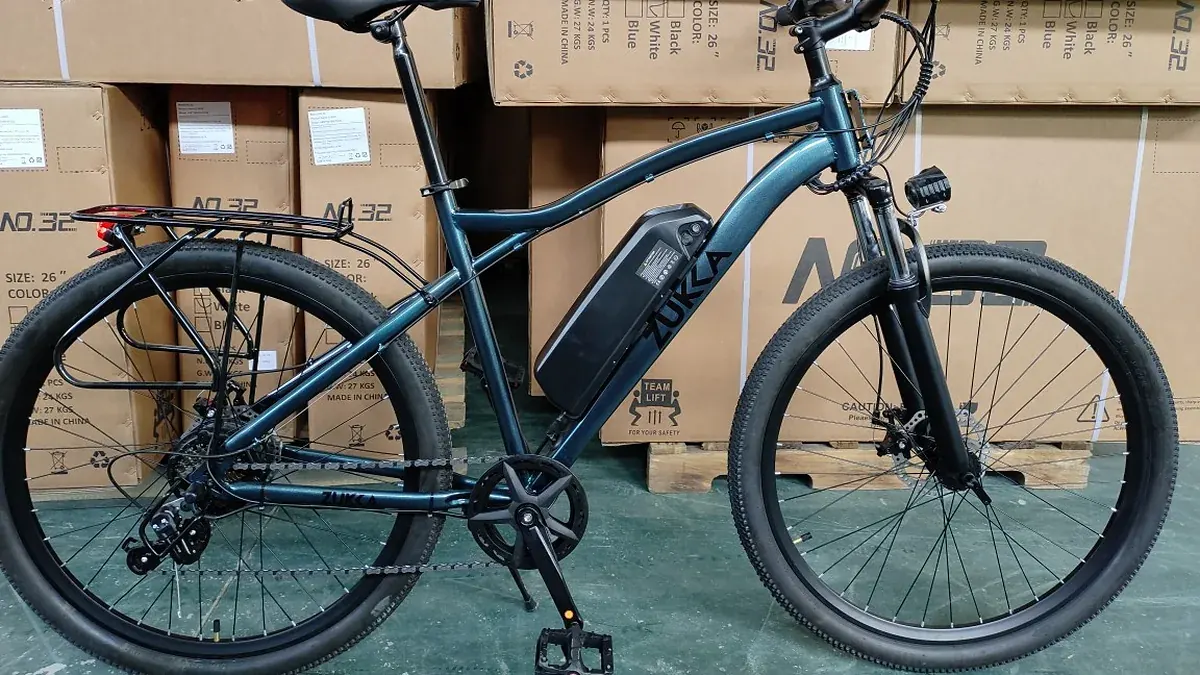
First, find the mark on the product itself. It’s usually on the battery pack or on a label near the bottom bracket. Ask the seller for a photo of the label, not a screenshot of a certificate PDF.
A certificate PDF is trivial to fake. A label photo with a file number on it is harder, and it’s the thing you’re about to look up anyway.
Second, take that file number to UL Product iQ. It’s UL’s own public database and it’s free. Search the number and read what the entry actually covers.
Read the scope carefully. You want to see 2849 covering the complete system. If the entry only lists a battery, you’re looking at 2271 and you don’t have what you need.
Third, check the company name. The file should sit under a real manufacturer, and the name should match something the seller can say out loud. If the seller can’t tell you who built the bike, that’s your answer.
Then check it again when the box arrives. The label in the photo and the label on the delivered bike are not always the same label.
If the number doesn’t come back in Product iQ, treat the bike as uncertified. Not probably fine. Uncertified.
That sounds harsh. It’s also the only rule that survives contact with a seller who really wants your money.
Watch for one specific trick. Listings say “UL listed components” or “the battery cells are UL certified.” Cells do get certified, and that has nothing to do with whether the assembled bike passed 2849.
I’ve started reading that phrase as a confession. If the bike had the real listing, they’d be shouting the file number instead.
Price is where this gets emotionally difficult. A certified bike from a US brand might run $1,400. A similar-looking one direct might run $700. That’s a real gap, and I’m not going to pretend it isn’t there.
But a bike you’re not allowed to charge in your own building isn’t a $700 bike. It’s $700 of metal standing in the hallway.
Separate from certification, there’s the class question. E-bikes fall into three classes in most states, based on top assisted speed and whether they have a throttle. Class 3 bikes are barred from some bike paths outright. A bike that’s legal to own can still be illegal to ride exactly where you planned to ride it.
One thing that surprised me while checking listings: the file number often sits on the same sticker as the serial number, and sellers photograph the serial while cropping the rest. Ask for the full label, unedited, with the frame around it visible.
And check the charger on its own. A certified bike paired with a counterfeit charger is the combination behind most of the fires people read about, and replacement chargers are among the easiest things in the world to buy from the wrong seller.
And do the lookup on a laptop if you can. Product iQ is unpleasant on a phone, and this is a case where you want to read the scope line properly instead of squinting at it.
And there’s a middle option people overlook. Used bikes from US owners already carry whatever certification they shipped with, and the price sits between the two. Worth a look before you gamble on a direct order.
One practical note if you’re ordering direct instead of from a US warehouse. A bike battery is large, and large lithium batteries are the item forwarders refuse most often. I covered what shipping from China to the US costs already, and the battery problem shows up there too.
And if you’re going further than a normal purchase, the certification question is only one layer. I went through what it takes to bring a Chinese car or e-bike into the US separately, and the compliance stack is taller than most buyers expect.
The honest summary is that a cheap e-bike from a Chinese seller isn’t automatically unsafe, and an expensive one isn’t automatically certified. The only thing that settles the question is a number you can look up.
Two minutes on UL Product iQ is the cheapest insurance in the whole purchase. Spend it before you pay, because after you pay you’re arguing across timezones about a bike you can’t plug in.