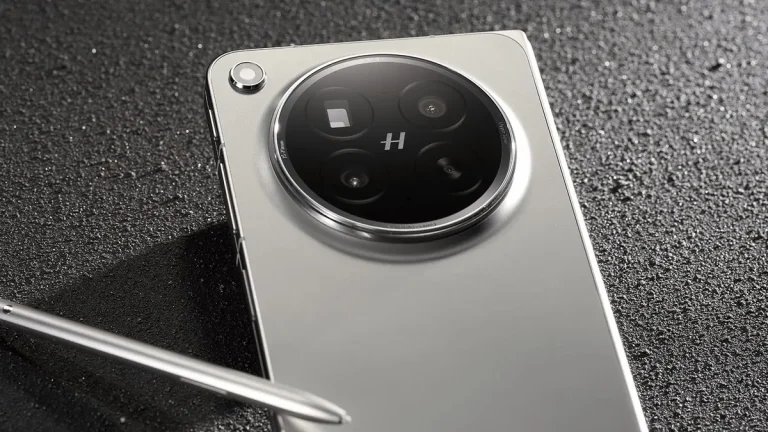
Xiaomi just held the most revealing phone launch of the year, and the interesting part wasn’t the phone. It was the apology. Lei Jun, the company’s founder, stood on stage and pre-explained the price before anyone could complain. Memory has gotten very expensive, he said, so the new Xiaomi 18 Fold starts at $1,540, and the ceramic version runs $2,240. This is the company that built its reputation on undercutting everyone.
When the most aggressive discounter in phones starts asking for understanding over component costs, something structural is going on. And this time the something isn’t the chip, the camera, or the foldable screen. It’s the memory inside the phone. The AI boom wants it too. And the AI boom pays more.
The numbers are no longer subtle. IDC expects the average selling price of a smartphone to hit $581 this year, up 27.6%, while shipments fall about 17%. Counterpoint’s tally of phones actually on sale shows retail prices up 15% on average, with some models nearly doubling. Phones did not get dramatically better in twelve months. That’s the tell.
Where the money actually goes
Open up a flagship phone’s bill of materials and look at what grew. Counterpoint puts DRAM at roughly 23% of the component cost on an $800-plus phone, with NAND storage adding another 18%. That’s over 40% of the bill in two parts that did nothing interesting this year except get expensive. Two years ago those lines were an afterthought.
The squeeze is worse at the bottom. Omdia’s numbers have memory and storage eating about 59% of the bill on a sub-$400 phone. There is nowhere to hide in that segment.
A maker of cheap phones can skip a better camera. It can skip a faster chip and skip the titanium frame. It cannot skip the memory, because the memory is what runs the system the customer already expects.
So my read is that the cheap phone dies first, and it was already dying. The $200 to $300 segment will thin out, get stuck with last year’s storage, or slide up in price until it isn’t cheap anymore. If you’ve been recommending budget phones to relatives, the pickings are about to get worse. The reason has nothing to do with phones.
Follow the memory and you end up in a data center. Samsung, SK Hynix, and Micron control more than 95% of DRAM supply, and all three are steering capacity toward servers, because that’s where an AI buildout pays premium prices.
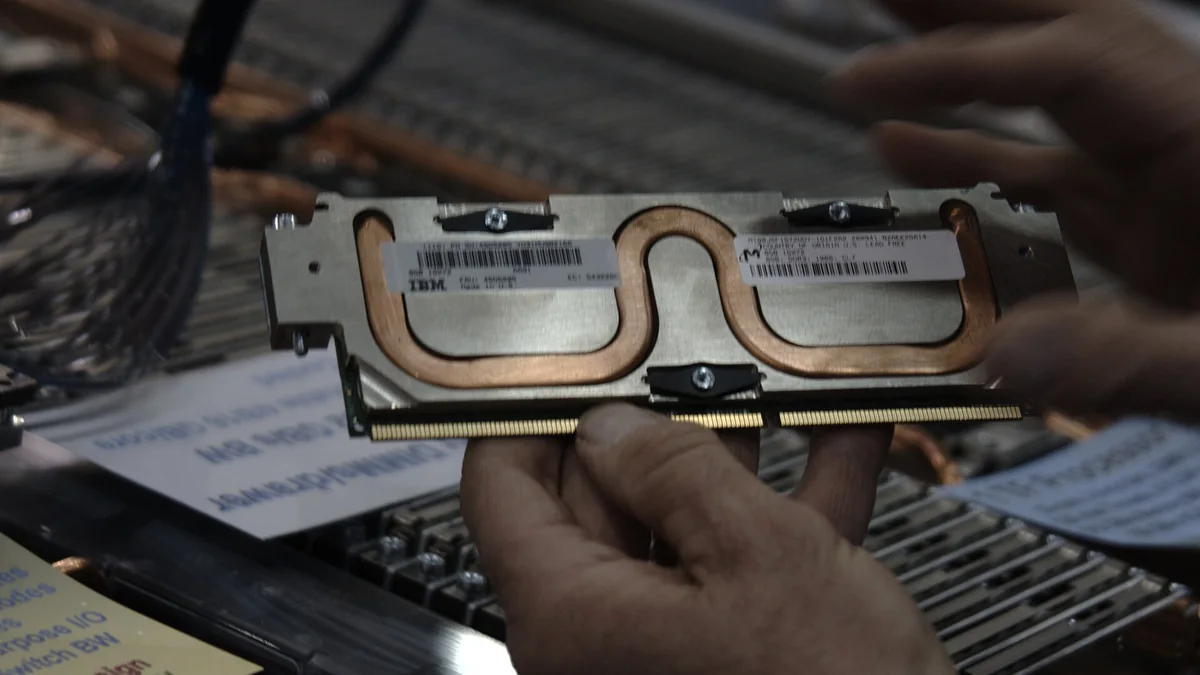
Micron just demonstrated a 512GB DDR5 module aimed squarely at AI inference racks. Your phone and a training cluster are bidding on the same wafers. The training cluster has more money. And it has a signed contract.
That last part matters more than people realize. The pricing pressure isn’t a spot-market rumor. Long-term agreements have locked up capacity two to three years out, which is exactly the kind of commitment a consumer market never makes.
UBS expects the shortage to run through the second quarter of 2028. Morgan Stanley projects mature-node DRAM prices climbing another 50% this quarter. TrendForce has contract prices rising 13 to 18% in a single quarter. Xiaomi’s own president, Lu Weibing, told investors this cycle lasts until the end of 2027.
It’s fair to push back here. Memory has always been cyclical, and it crashed hard in 2018 and again in 2021 after each shortage. Buyers who waited out those cycles got their cheap upgrades eventually.
My judgment is that this cycle behaves differently for one reason: the buyer on the other side isn’t consumers upgrading on emotion. It’s infrastructure spending with committed budgets. Infrastructure doesn’t change its mind the way phone buyers do.
There’s a second reason the pain feels muted in America, and it’s worth naming. Most US phones are sold on installment plans, where a $100 component increase becomes $4 a month and nobody notices. In China, where phones are bought outright, the increase lands all at once, which is why the apology happened on a Shenzhen stage and not at a carrier event.
Unsubsidized markets are the canary. The subsidized market gets the bill later. It arrives folded into the monthly payment.
The wildcard is Chinese memory
Enter the part of this story that almost no US coverage mentions. CXMT, China’s largest DRAM maker, is now the world’s number four memory supplier by both shipments and revenue. It reported first-half revenue of roughly $21 billion, up 873% year over year, with a gross margin north of 84%. In September it started mass production of LPDDR6. It is the newest mobile memory standard, and the first phone to carry it is that $1,540 Xiaomi fold.
The textbook answer says more supply should cool prices. My judgment is that it won’t help your phone bill much, for an unglamorous reason: CXMT’s new capacity is largely spoken for by domestic AI demand and long-term contracts, and its yields on the most advanced nodes are still catching up. A fourth supplier with a full order book doesn’t crash the market. It just opens a crack in the oligopoly. That matters in 2028, and matters little this Christmas.
For a US reader there’s an extra twist: you can’t even vote with your wallet here. The phones carrying this new memory don’t reach American carriers anyway, for reasons that have more to do with certification and carrier economics than with the hardware itself. Your options stay the same. Samsung and Apple, priced off the same global memory market.
And that market prices DRAM like a commodity, which means the Chinese-made memory in a Nubia phone and the Korean-made memory in a Galaxy sit on the same upward escalator. There is no cheap supply chain left to buy from. That’s the whole point of a shortage this broad.
Practical advice, then, since that’s what you came for. If your contract upgrade is due in the next year, take it early rather than waiting for a holiday discount. But the discount will be smaller than the increase. If you’re shopping off-contract, buy the storage tier you actually need instead of the one you’ll “grow into,” because NAND is where the worst per-gigabyte increases are hiding.
If your current phone still works, the best move is the boring one: keep it. A three-year-old phone that does everything you need is the only gadget in this story whose price is going the right way. The used market tracks new prices. As new ones climb, your old phone quietly gains resale value instead of losing it.
One more prediction, and you can hold me to it. Cloud storage plans will follow hardware prices up before this cycle ends, because the same DRAM and NAND squeeze hits the data centers that hold your photos. You won’t see that squeeze in the store. You’ll see it on the subscription. Everything that stores a byte is connected to the same shortage now.
Expect more apologies from more stages. The next time a phone executive sighs about component costs before announcing a price, remember what actually happened: the memory in your pocket found a richer customer, and phones are now the second-most profitable thing a wafer can become. That’s not a scandal. It’s just what happens when the future gets built out of the same parts as the present.
Featured image: a technician seats a memory module by hand, photo by Patrick Finnegan, CC BY 2.0, via Wikimedia Commons.