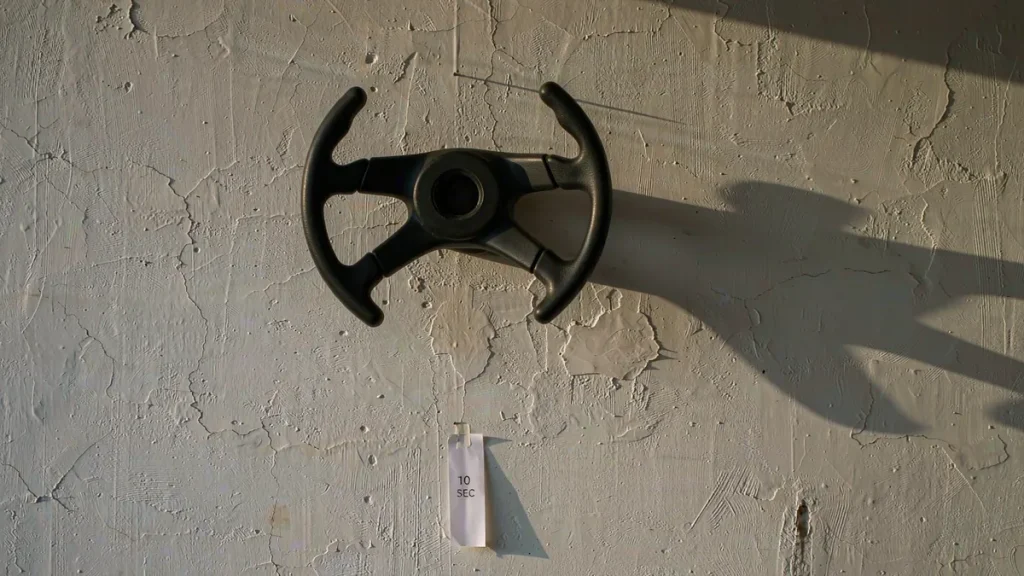
BYD put a car on sale last week whose steering wheel folds into the dashboard. You cannot use that feature while driving. It only works when the car is parked.
That sounds like a gimmick, and for most buyers it is. But the reason BYD built it is worth understanding. It explains where Chinese car interiors are heading.
What the folding wheel actually does
The feature is on the top trim of the Fang Cheng Bao Tai 9, a six-seat plug-in hybrid SUV that launched in China on November 19. Here is the sequence:
- The driver stops and puts the car in park
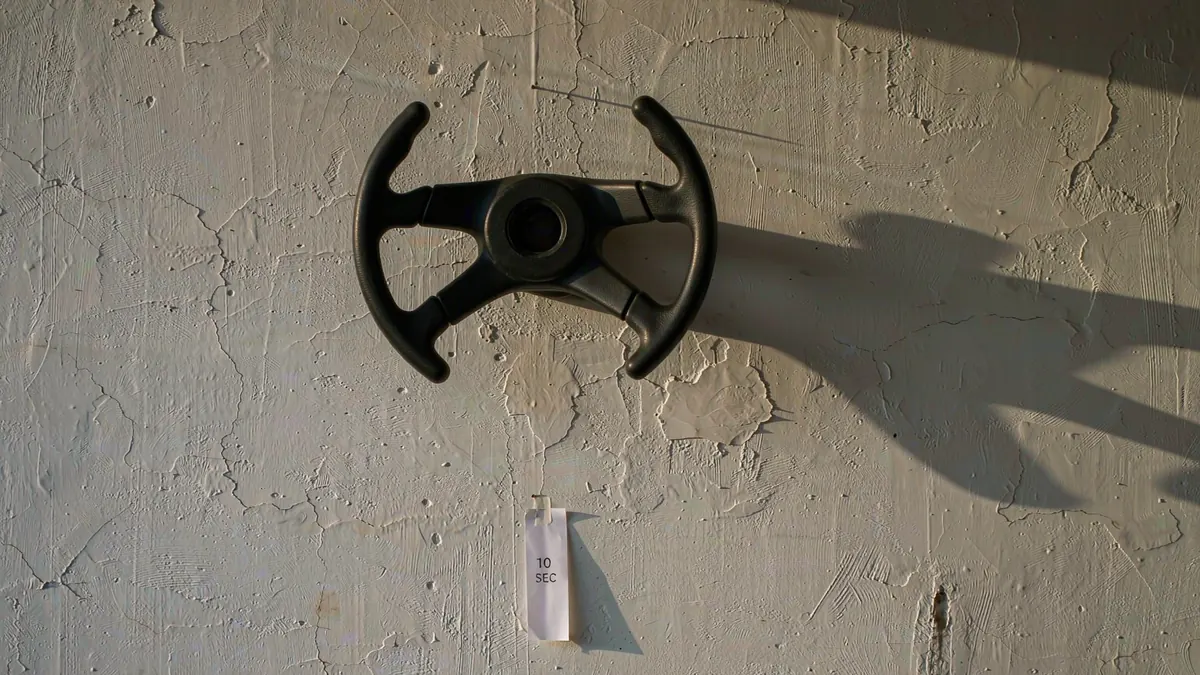
- The wheel rotates and retracts into the dash in about 10 seconds
- The driver’s seat reclines to 165 degrees
- A tray folds out where the wheel used to be
- The cabin becomes a flat space with a small desk
The mechanism uses a hinge with a 180-degree range and a motor borrowed from humanoid robots. BYD rates it for 80,000 stop-start cycles. It runs on a steer-by-wire system, which is what makes it possible at all. There is no mechanical column to fold.
BYD says it built five layers of redundancy into the system, each with a backup. That is a lot of engineering for a parking feature.
Why it exists
The company is not shy about the answer. The folding wheel is hardware for Level 3 driving. Level 4 too. It shipped before the rules allow either.
When a car drives itself, the driver becomes a passenger. A steering wheel in front of a passenger is dead weight. Folding it away is one way to reclaim that space.
China has not approved Level 3 driving for private cars on public roads. So the feature ships as a comfort item. It is a bet that the rules will arrive before the car is scrapped.
What the rest of the car costs
Three trims, and the folding wheel is only on the most expensive one:
| Trim | Approx. USD | Folding wheel |
|---|---|---|
| Four-wheel drive Max | $41,200 | no |
| Four-wheel drive Ultra | $44,200 | no |
| Folding cabin | $48,500 | yes |
So the wheel costs about $4,300 over the middle trim. That is not nothing. It also buys a tray, a reclining seat and a party trick.
The rest of the spec sheet is standard BYD. A 1.5-liter turbo plus two motors making 400kW combined, or about 536 horsepower. Zero to 62mph in 4.8 seconds. A 66.48kWh battery with 249 miles of CLTC range, which is the optimistic Chinese cycle, or 193 miles on the stricter WLTC test.
The car is 207 inches long and sits on a 123-inch wheelbase. It has six seats in a 2+2+2 layout. The turning radius is 16.2 feet, tight for something this size, and a crab-walk mode brings it to 11.6 feet.
The real question
There is a maintenance question nobody at the launch answered. A folding column is a moving part. It has a motor, a hinge and five redundant systems. When it fails, it fails in whatever position it was in, and the driver has no mechanical fallback because there is no column at all.
BYD would say the redundancy is why that will not happen. Fine. But redundancy is a design claim. Design claims get tested by the first owner who parks on a hill in winter.
Does anyone need this? Not yet. The folding wheel solves a problem that Level 3 driving would create, and Level 3 driving does not exist in Chinese showrooms.
But the same was true of large screens, ambient lighting, and massaging seats a decade ago. Those started as top-trim novelties and became expected features. The difference is that a screen costs almost nothing to add. A folding steering column is a mechanical system with its own failure modes.
If the rules change, BYD has a head start. If they do not, the top trim has a party trick and a $4,300 premium.
Who this is actually for
The buyer this was designed for is a driver waiting somewhere. School pickup. A charging stop. In those moments a flat floor and a reclined seat are genuinely useful.
That is a real use case. But a neck pillow and a seat that already reclines cover most of it.
I would take the middle trim. The seat still reclines. The car still drives the same. And the wheel stays where your hands expect it.