I’ll be honest: I had high hopes for DeepSeek Harness.
When I heard DeepSeek was releasing their first Agent product, I pictured something like Codex or Workbuddy. Maybe a polished desktop app. Or at least a Claude Code-style CLI tool that you could fire up and start using right away. I thought the whole point was DeepSeek’s model plus their own harness, working together to blow everything else out of the water. Better than Claude Fable. Faster than GPT Sol. Best cache hit rate in the game. Charge me more if you want. Just give me a token plan and take my money.
If you’re on a newer build, it behaves differently now. RC.8 turns it into a dispatch layer for other agents, which is a different product from the one I started with.
Instead, we got something… different.
DeepSeek dropped Harness v0.1 on August 13, 2026, the same night they announced the V4 Pro stable release and a big API price hike. Two announcements at once. One made people excited. The other made people mad. But honestly? The timing almost felt deliberate, like they knew the price news would sting, so they tossed out a shiny new toy to soften the blow.
Agent tooling moves fast enough that I’ve started reading the source of these things myself instead of trusting the announcement posts.
One thing is clear, though: Harness isn’t really a toy for regular users.
First Impressions: This Thing Is Geeky
To get it running, you need npm install. That alone tells you who this is for. If you don’t know what Node.js is, you’re already out. You clone the repo, run pnpm install, pnpm run build, then pnpm dsh web. Or if you’re feeling fancy, npx @deepseek-ai/dsh web. Either way, you’re in the terminal. Not exactly “grandma-friendly.”
I get it. It’s a developer preview. v0.1. They said it themselves: rough edges everywhere, rapid iteration coming, breaking changes ahead. But still. The gap between what people expected and what landed is pretty wide.
The Plugin Obsession
The big idea behind Harness is “everything is a plugin.” And I mean everything. Model, tools, skills, sessions, sandbox, storage, agent loop, scheduling, UI: all of it is swappable. You don’t like the frontend? Replace it. Don’t like how the agent loops? Swap it out. Don’t like the model? Plug in something else.
During the internal preview, developers reportedly built hundreds of plugins in days. Some made retro Windows XP skins. Some made emoji plugins that send you a fat fish meme after the agent finishes a task. Fun? Sure. But also kind of… pointless?
I saw all these screenshots from beta testers showing off custom skins and UI tweaks. And I kept thinking, who cares? I’m not here to put makeup on a black whale. I’m here to see if this thing can actually do work. Can it crush Codex with V4 Pro + Harness? Can it finish tasks faster, cheaper, better?
Show me the benchmarks. Show me the cache hit rates compared to Claude Code. Show me the scores.
Instead, we got skins.
Okay, But There Are Real Gems Here
I don’t want to be totally negative. There are two things Harness does that genuinely impressed me.
First: trajectory tracing.
This is the feature that actually made me stop and pay attention. Harness records everything the model sees: system prompts, chain-of-thought, tool calls and results, sub-agent scheduling, every context injection. It’s append-only, so nothing gets compressed away. You can go back and see exactly what happened, step by step, like browser DevTools for your agent.
This matters because agents are becoming black boxes. You give them a task, they do stuff, you get a result, but you have no idea what happened in between. With trajectory, you can debug. You can see where it got stuck, where it burned tokens, where it made a bad call. For anyone who’s ever had an agent go off the rails and couldn’t figure out why, this is huge.
Second: Cordis.
Okay, this one’s more abstract. But bear with me.
Cordis is the plugin framework underneath Harness. It only handles loading, unloading, and dependencies. Everything else, every single agent capability, is a plugin that plugs into Cordis.
What makes this different from something like Pi Agent? Pi is a minimal agent with plugins attached. Cordis doesn’t even have a model or session built in. It just defines how components fit together. The agent itself is just one possible combination of services.
DeepSeek’s vision seems to be: don’t build one agent. Build a system where any agent can be assembled from parts. Model, loop, session, tools, UI: all services. The agent is the output, not the product.
I’ll be honest: I’m not 100% sure I fully grasp why this matters yet. But DeepSeek is smart. They wouldn’t build this without a reason. My guess is they’re playing the long game. They want Harness to be the Android of AI agents, the base that everyone builds on top of.
The Price Hike Complication
One more thing. DeepSeek also announced API price hikes starting August 17. V4 Pro output tokens going from roughly 82 cents to about $3.70 per million at peak times. That’s a 350% increase.
People are mad. And I get it. But honestly? If Harness actually delivers on its promise, if it makes agents dramatically more efficient, if the cache hit rates are as good as people say, the price might be worth it.
That’s a big “if” though.
Where I Land
DeepSeek Harness v0.1 is not a finished product. It’s not for regular users. It’s for developers who want to build their own agent systems, piece by piece.
If you were hoping for a Codex killer you can download and start using in five minutes, skip it. Come back in six months.
But if you’re the type who likes tinkering, who wants to understand how agents actually work under the hood, who doesn’t mind getting your hands dirty in the terminal, this is worth a look.
I’ll keep using it. Might change my mind next week. We’ll see.
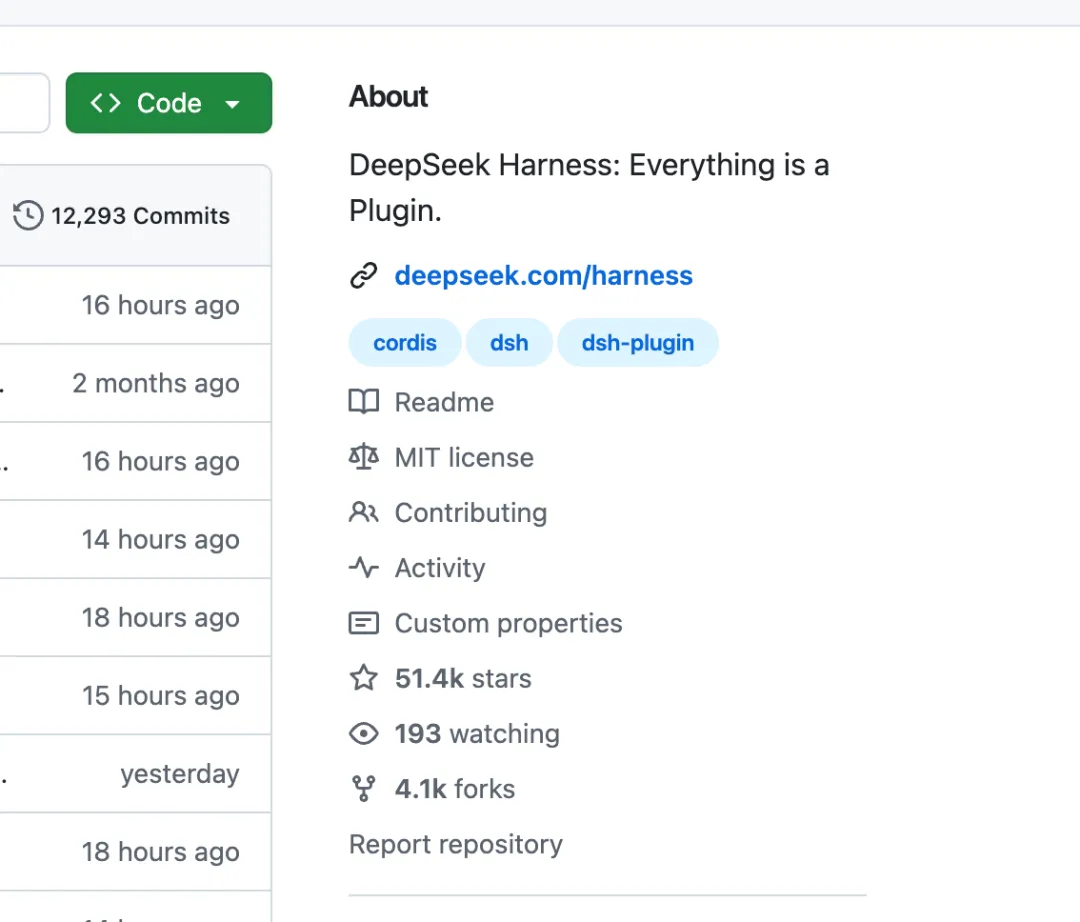
The repo is here: github.com/deepseek-ai/deepseek-harness.